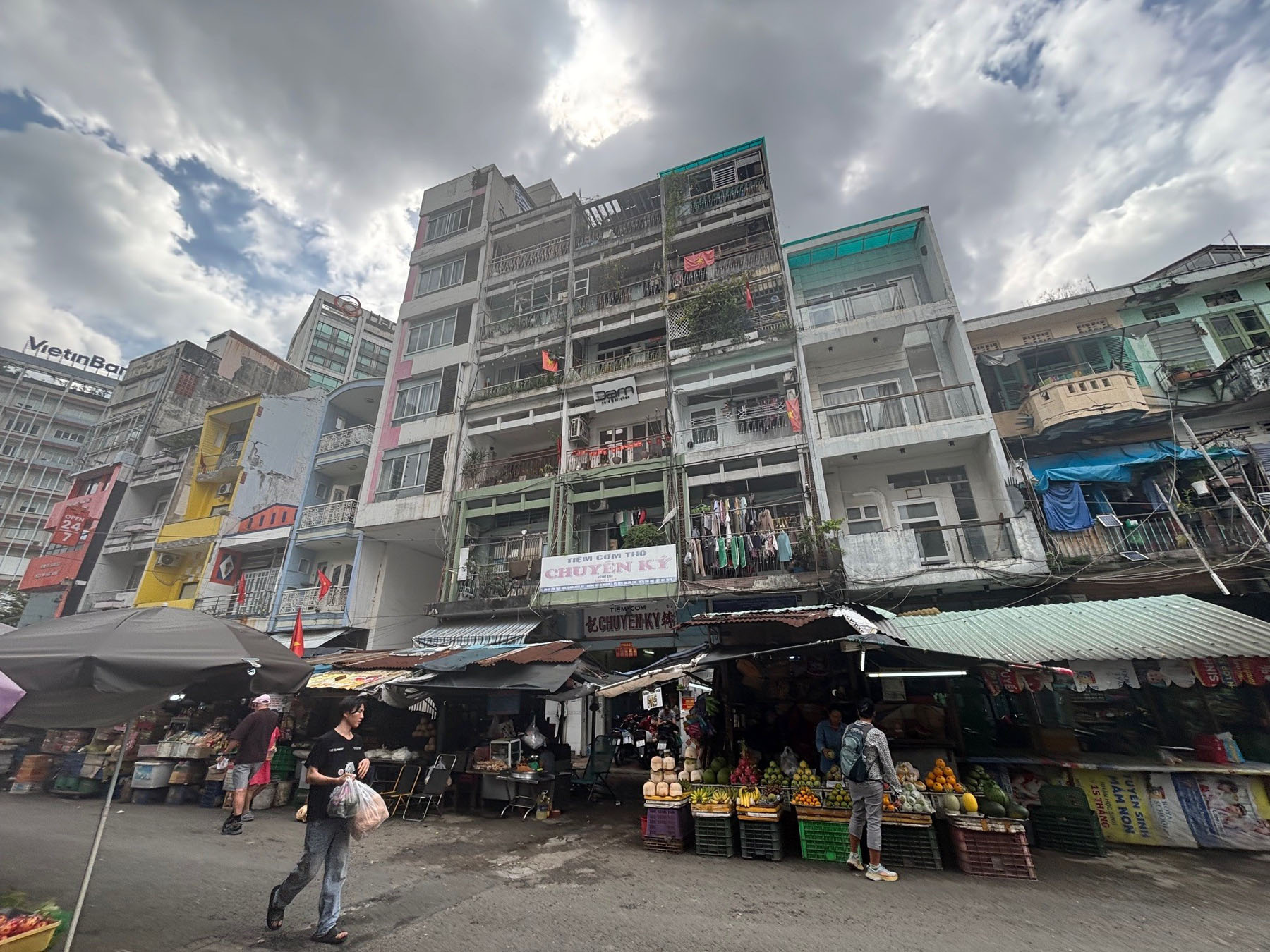
Stacked lives - HCMC
From above, the negotiation becomes visible. The wet market operates at ground level while families live five floors up, their laundry drying over the space where fish are sold at dawn. People move through - tourists, a man with shopping bags, vendors setting up. The building doesn't separate commerce and residential - it stacks them, one paying for the other's roof.
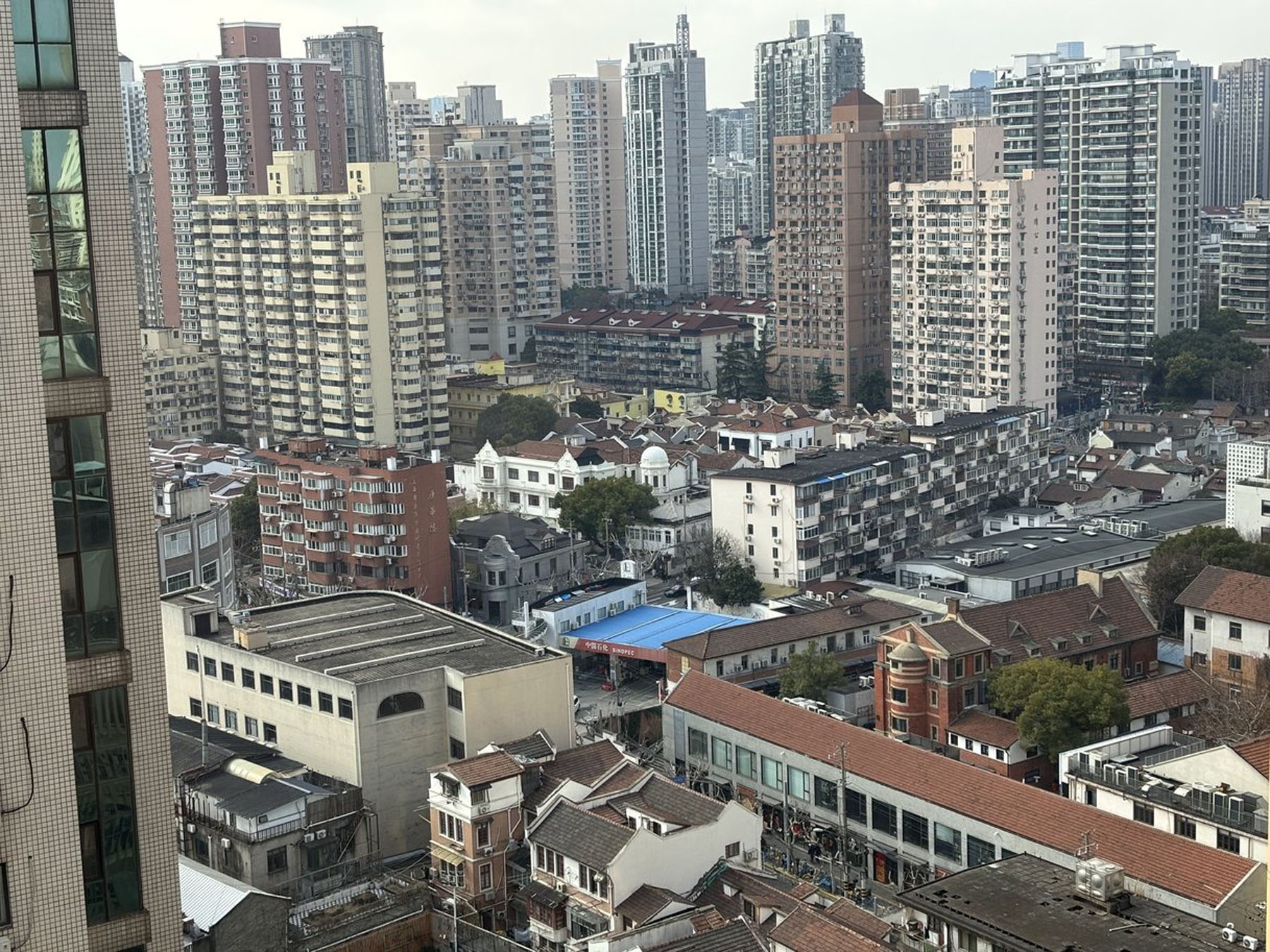
Density through negotiation - Shanghai
From this height, you can see into courtyards where grandmothers hang laundry and children do homework at folding tables. Mid-rise blocks create semi-private space between the public street and private apartments. Every rooftop carries something - solar panels, storage, someone's attempt at extra space. Density works through negotiation, not planning.
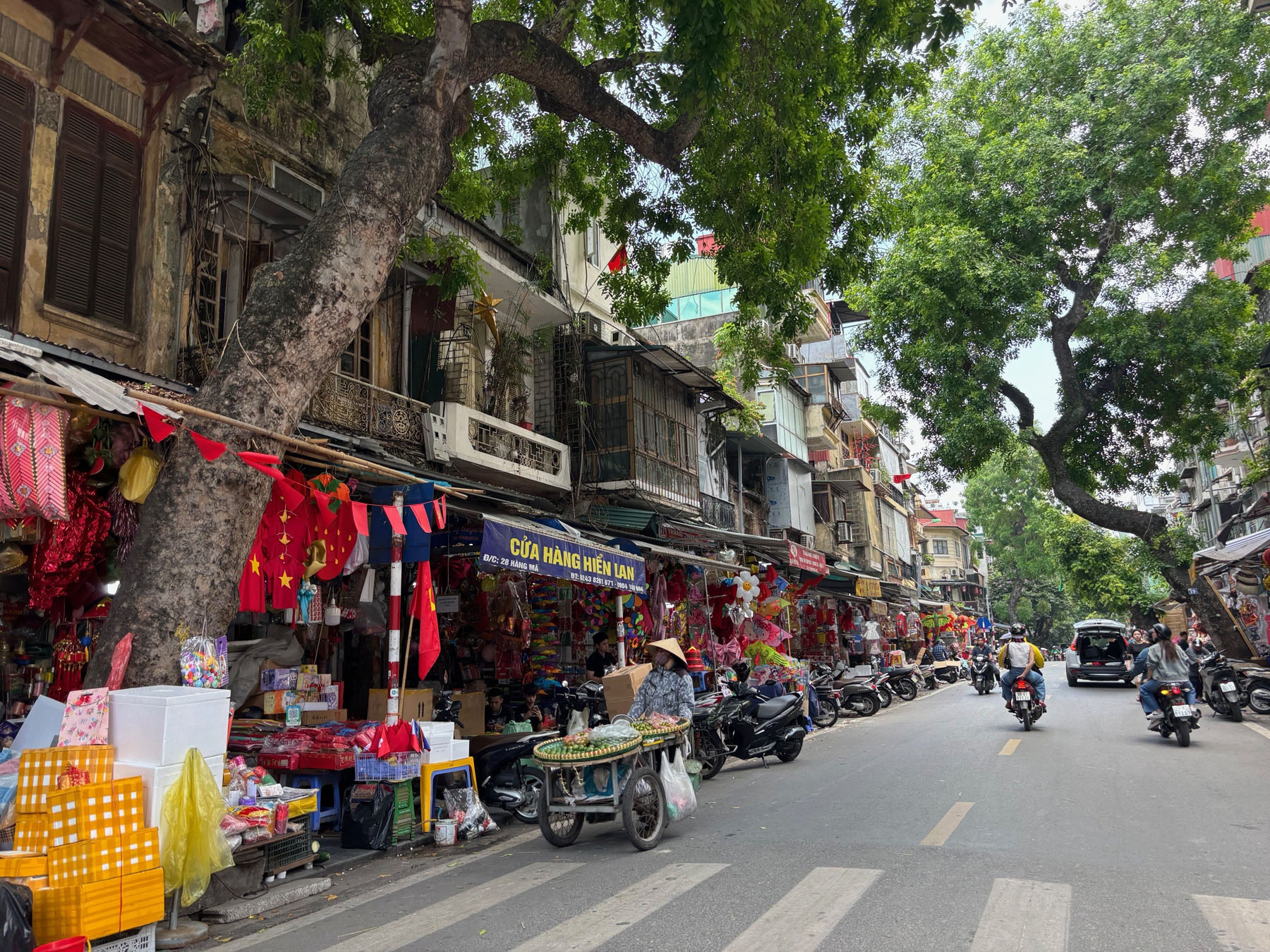
The gate as alarm clock - Hanoi
The ground floor shopkeeper rolls up the metal gate at 7 AM. The family upstairs hears it - their morning alarm for three generations. Old lanes survive because they're useful, not protected. Residential above, commercial below, motorbikes threading through. The building doesn't choose one function; it carries all of them simultaneously.
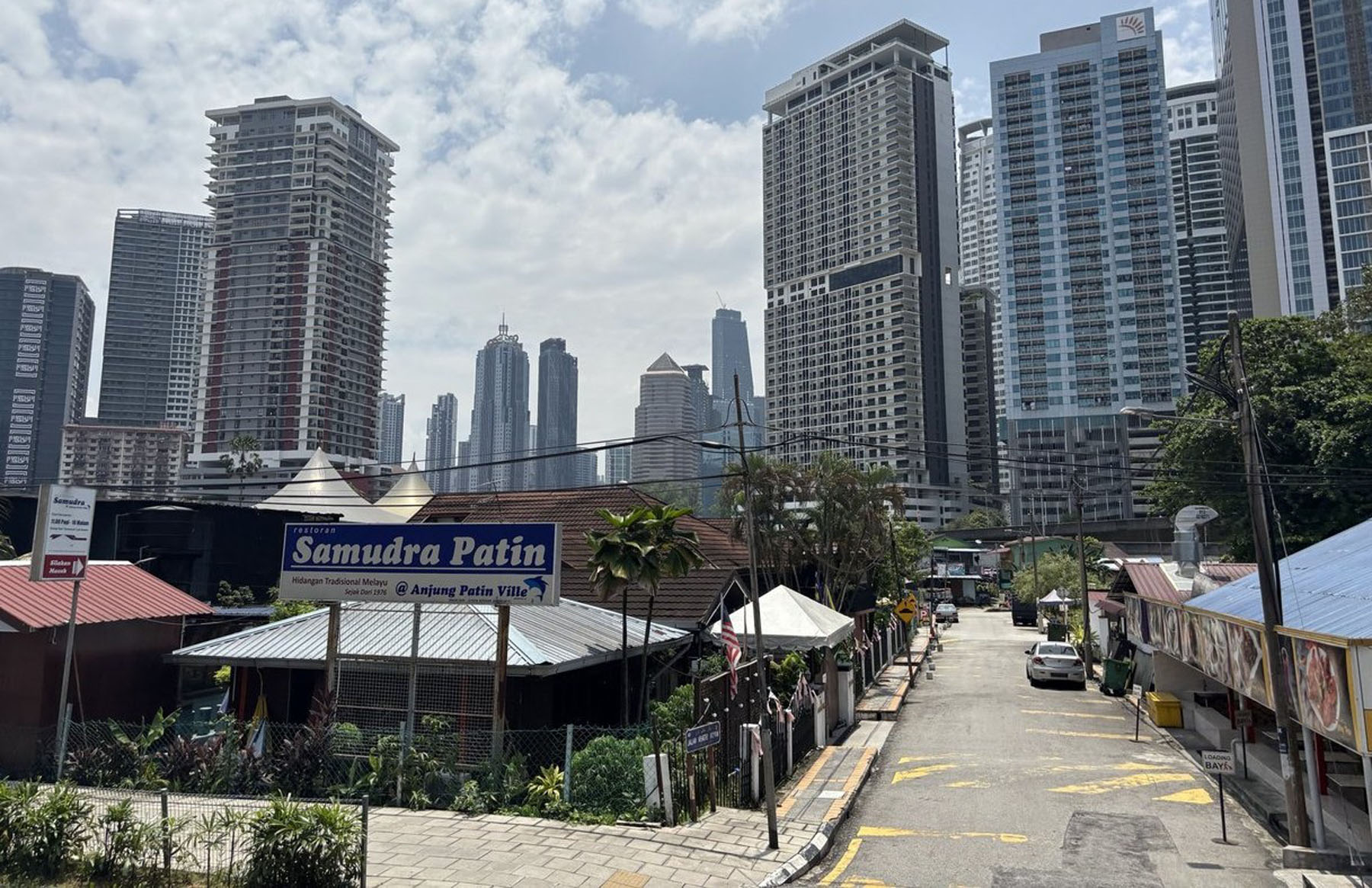
Time accumulates - Kuala Lumpur
The shopkeeper selling traditional medicine has watched towers rise around him for twenty years. His grandfather's shop remains while glass offices climb overhead. Time doesn't replace here - it accumulates. Old and new don't negotiate; they simply coexist, each operating on different scales, different speeds, different economies sharing the same block.
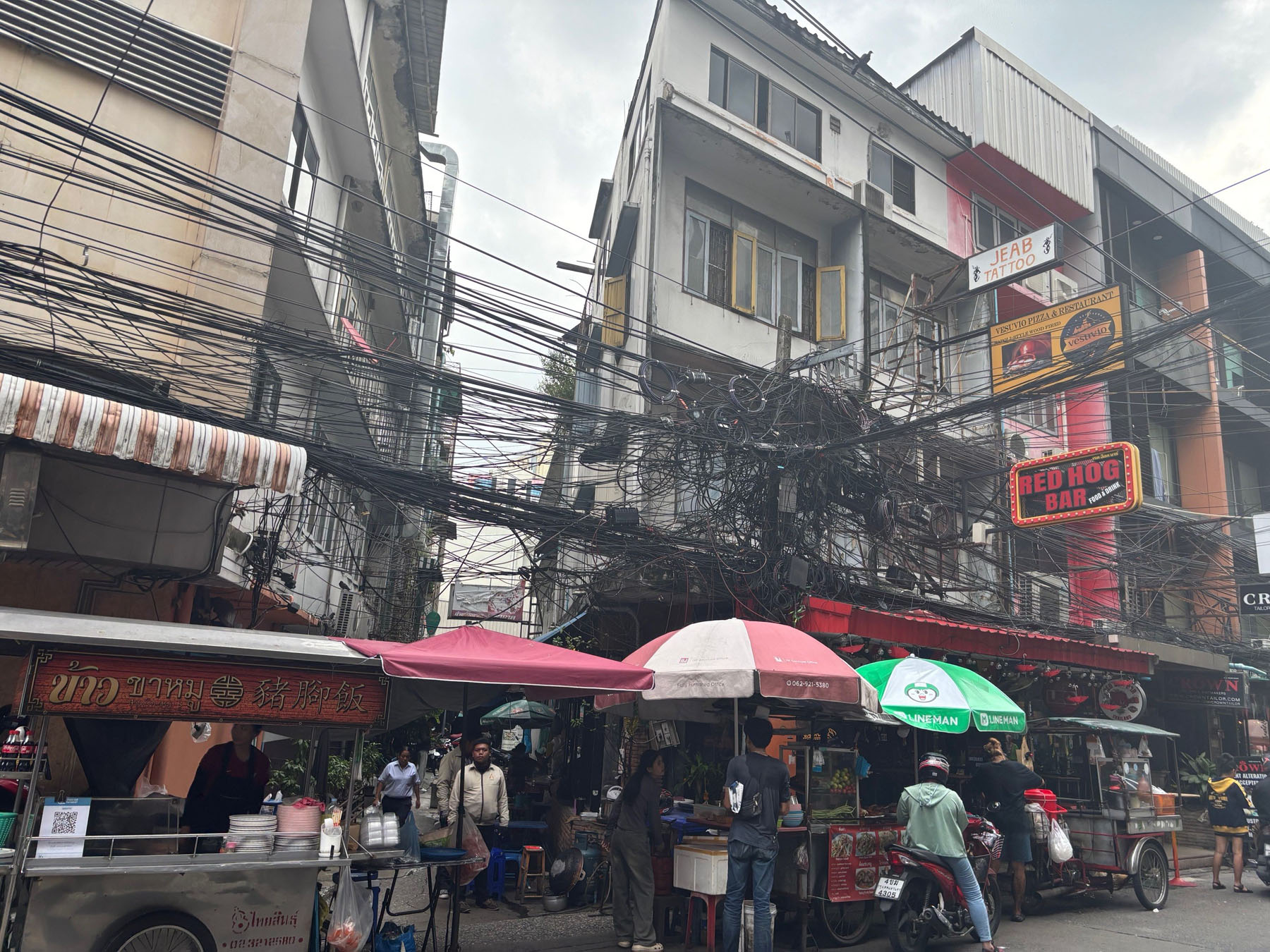
Neighbourhood biography - Bangkok
Every cable overhead represents someone saying "I need connection" - power, internet, television, telephone. The wires stay until they can't. Infrastructure accumulates rather than replaces because replacement means someone loses service, someone pays, someone goes dark. Look up: that tangle is neighbourhood biography written in copper and fiber.
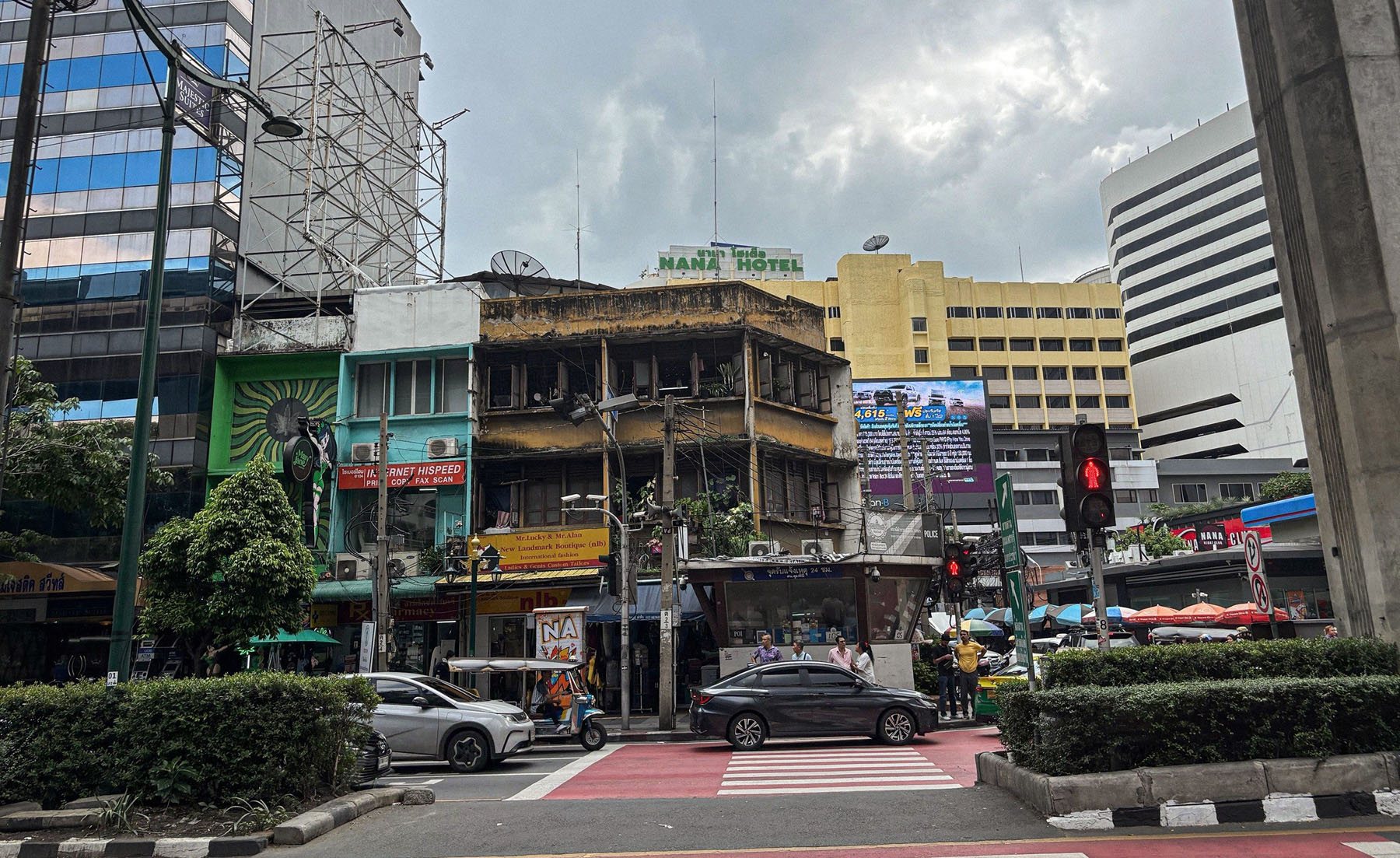
Survival through use - Bangkok
The weathered mustard building stands in the middle of a busy intersection, paint peeling from decades of sun and rain, possibly fire damage. Balconies show continued use - residential upstairs, shops below - despite its deteriorated state. Glass towers rise around it, but this building refuses demolition. Its survival isn't about preservation; it's about someone still paying rent, vendors still opening shutters each morning. The facade tells time better than any historical marker: every peeled layer is a decade, every stain a monsoon season. Character earned through wear, not design.
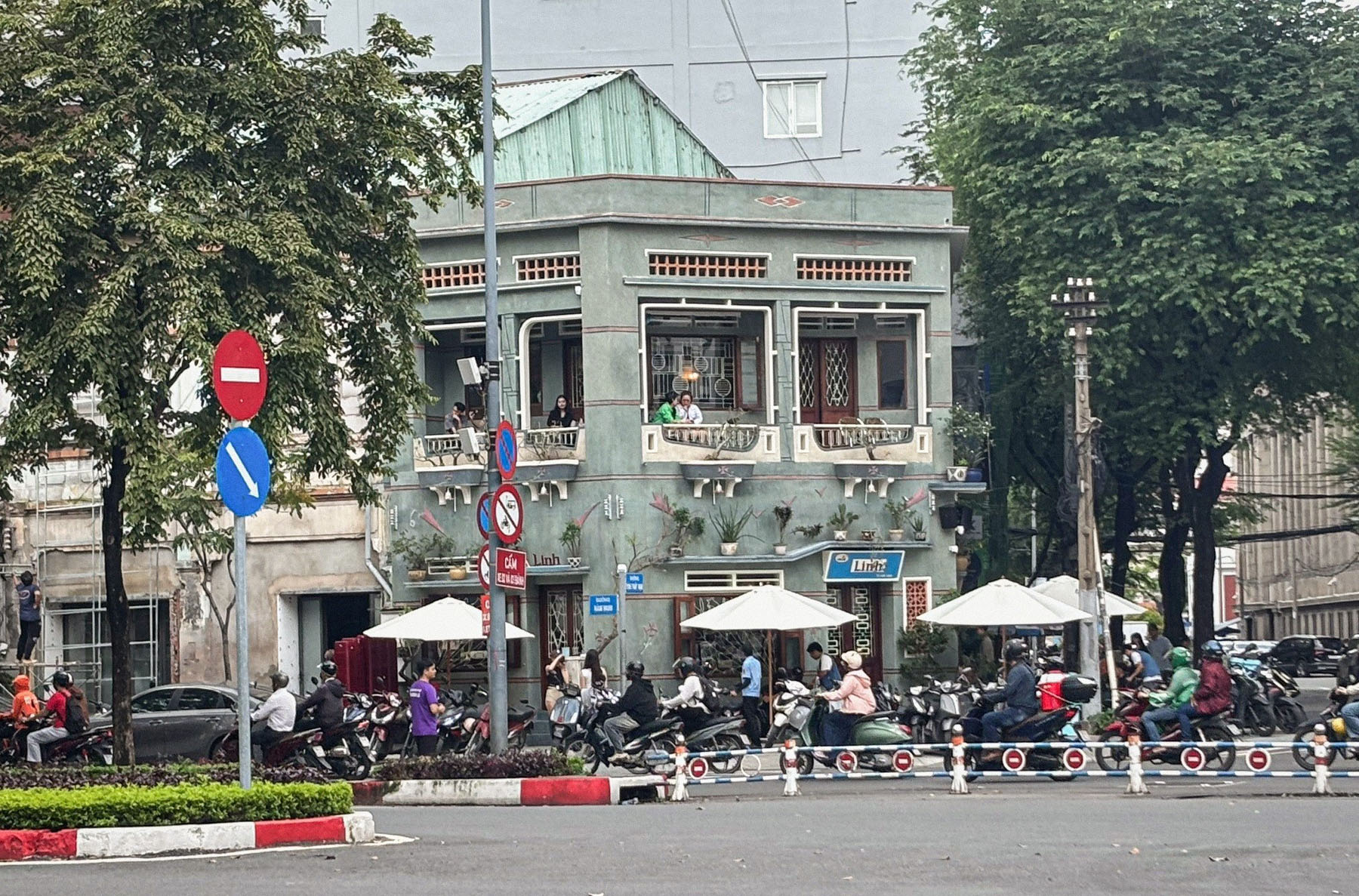
Heritage as adaptation - HCMC
The French colonizer who built this turquoise villa never imagined Vietnamese teenagers would sip ca phe sua da here eighty years later. Heritage isn't what you preserve - it's what you dare to change. The building survives by adapting, carrying history while serving present needs. The past doesn't freeze; it transforms.
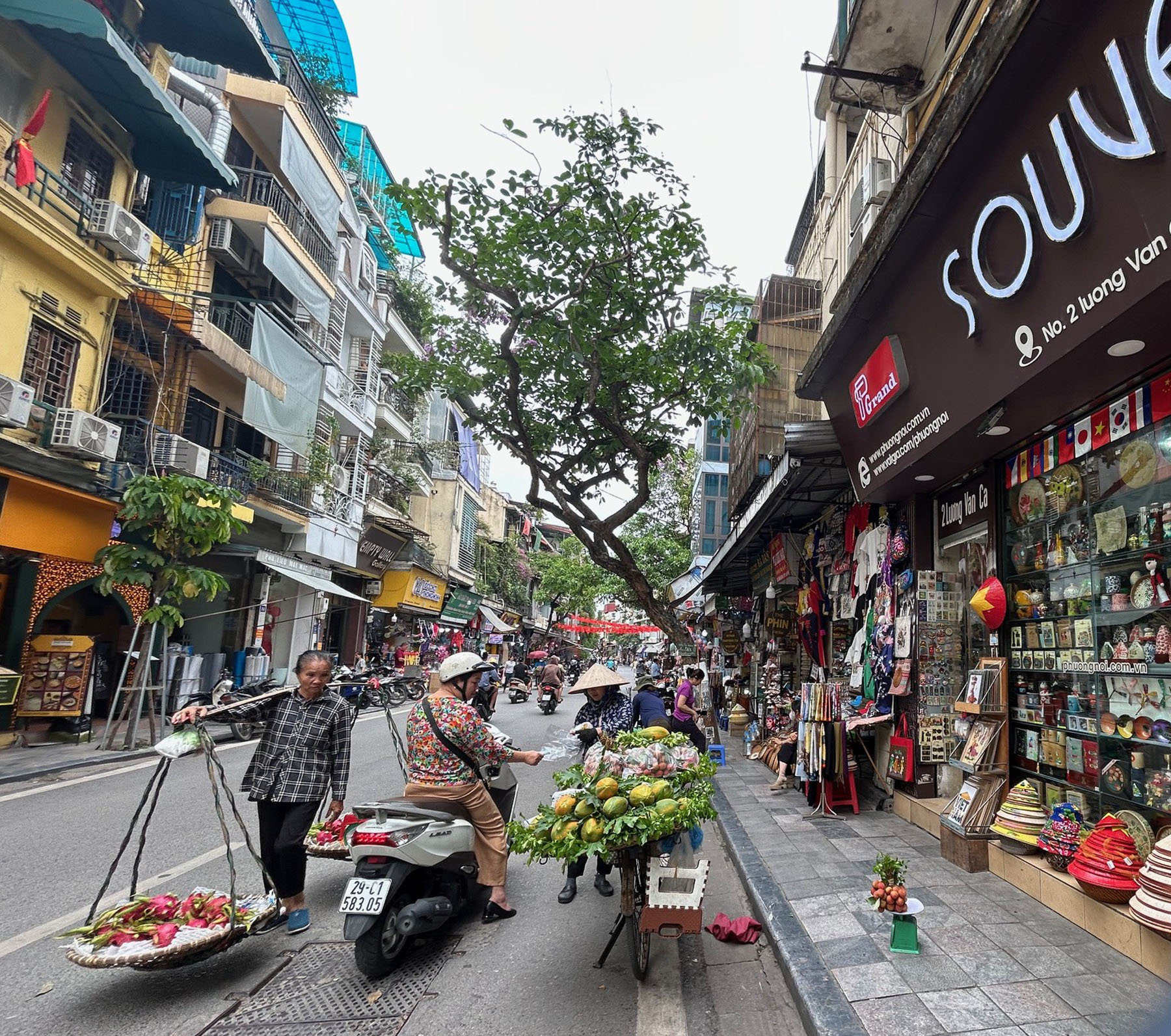
Space negotiated moment by moment - Hanoi
One vendor carries fruit in shoulder baskets, passing through. Another sells from her bicycle while a woman on a scooter stops to buy mid-street. Ground-floor shops line the pavement; mobile vendors occupy the road. The tree stays; traffic flows around it. Sidewalks become markets, streets become transaction spaces. The boundary between circulation and commerce disappears - everyone moves, everyone sells, everyone buys, all simultaneously. Space negotiated moment by moment.
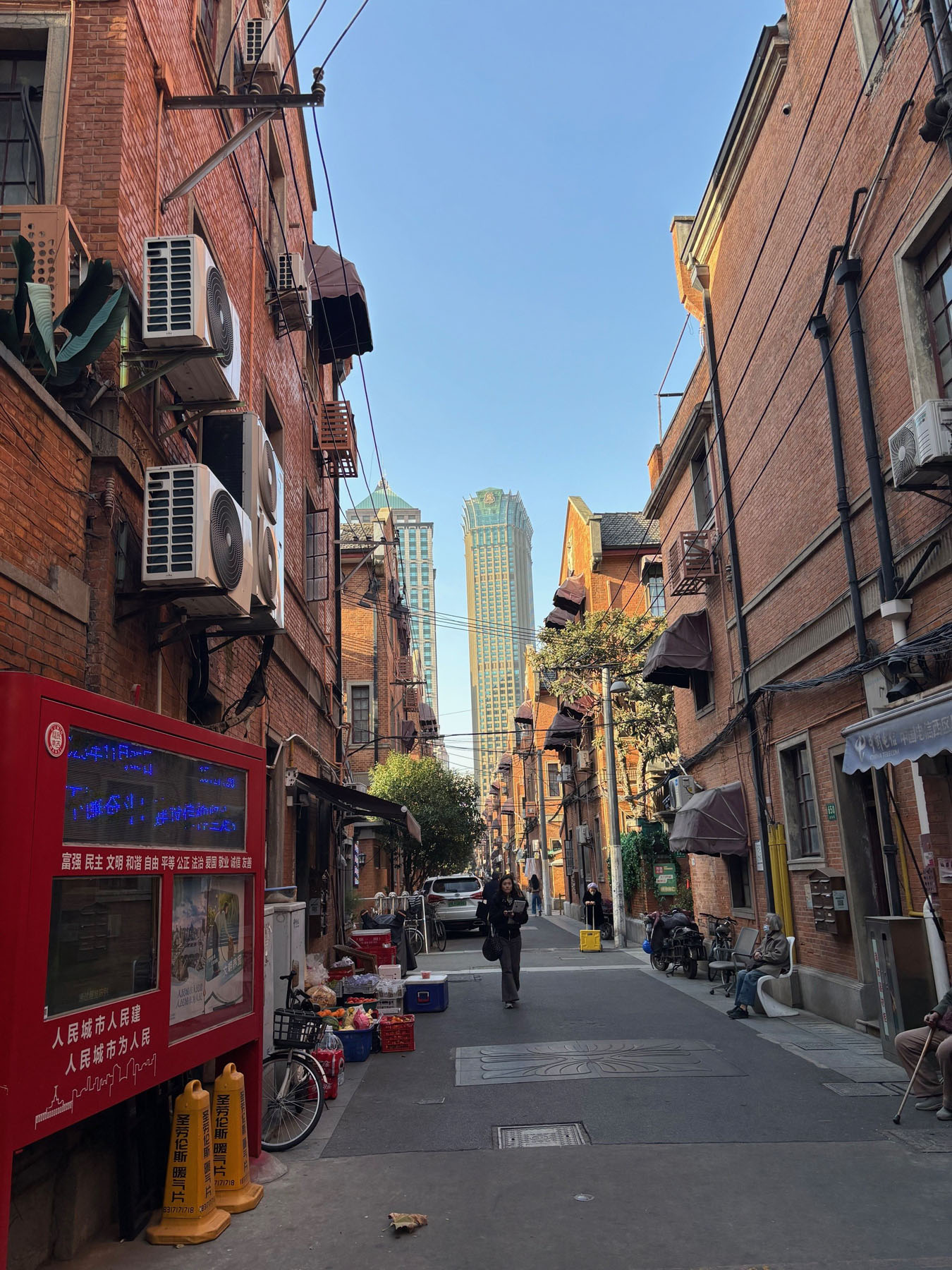
Multiple generations, same lane - Shanghai
Elderly residents sit near their doorways, waiting for family to return. A young woman with a notebook passes through - different generation, same lane. The brick buildings carry decades: air conditioners retrofitted onto 1930s facades, modern towers rising beyond the roofline. This lane has watched children grow up, leave, sometimes return. The lane supports residential access, morning commerce, afternoon rest, evening bike parking. Multiple generations, multiple functions, same narrow space.