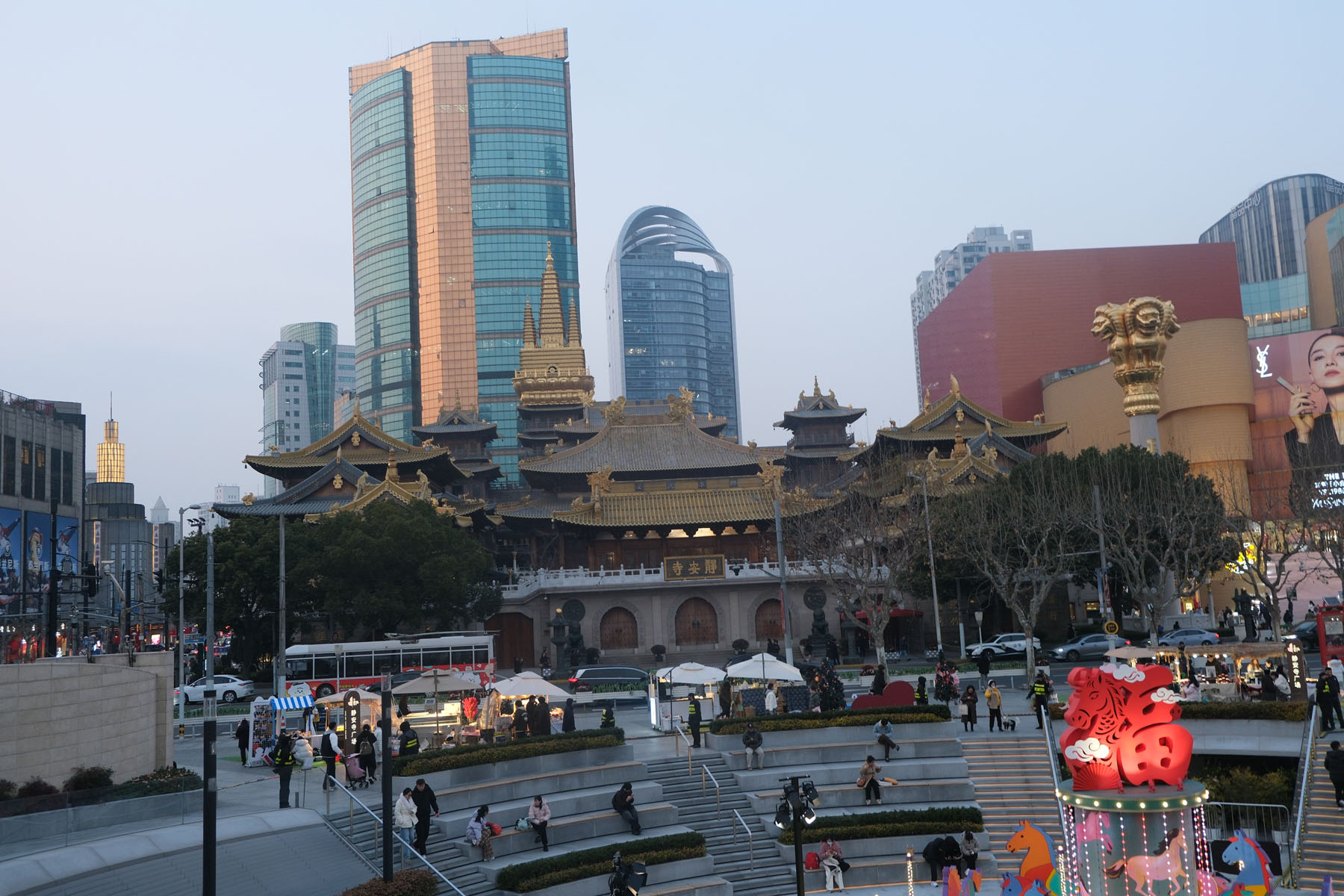
Ancient and commercial - Shanghai
From across the street you can see the whole arrangement at once: the golden temple in the middle distance, glass towers rising directly behind it, a YSL billboard holding its own against centuries of Buddhist architecture. The foreground plaza - New Year decorations, people sitting on steps - is unhurried, ordinary. The stage is over there, on the other side of the road. This is what the ritual looks like from outside it: a city that has learned to hold the ancient and the commercial in the same frame, neither cancelling the other, both entirely serious about what they are.
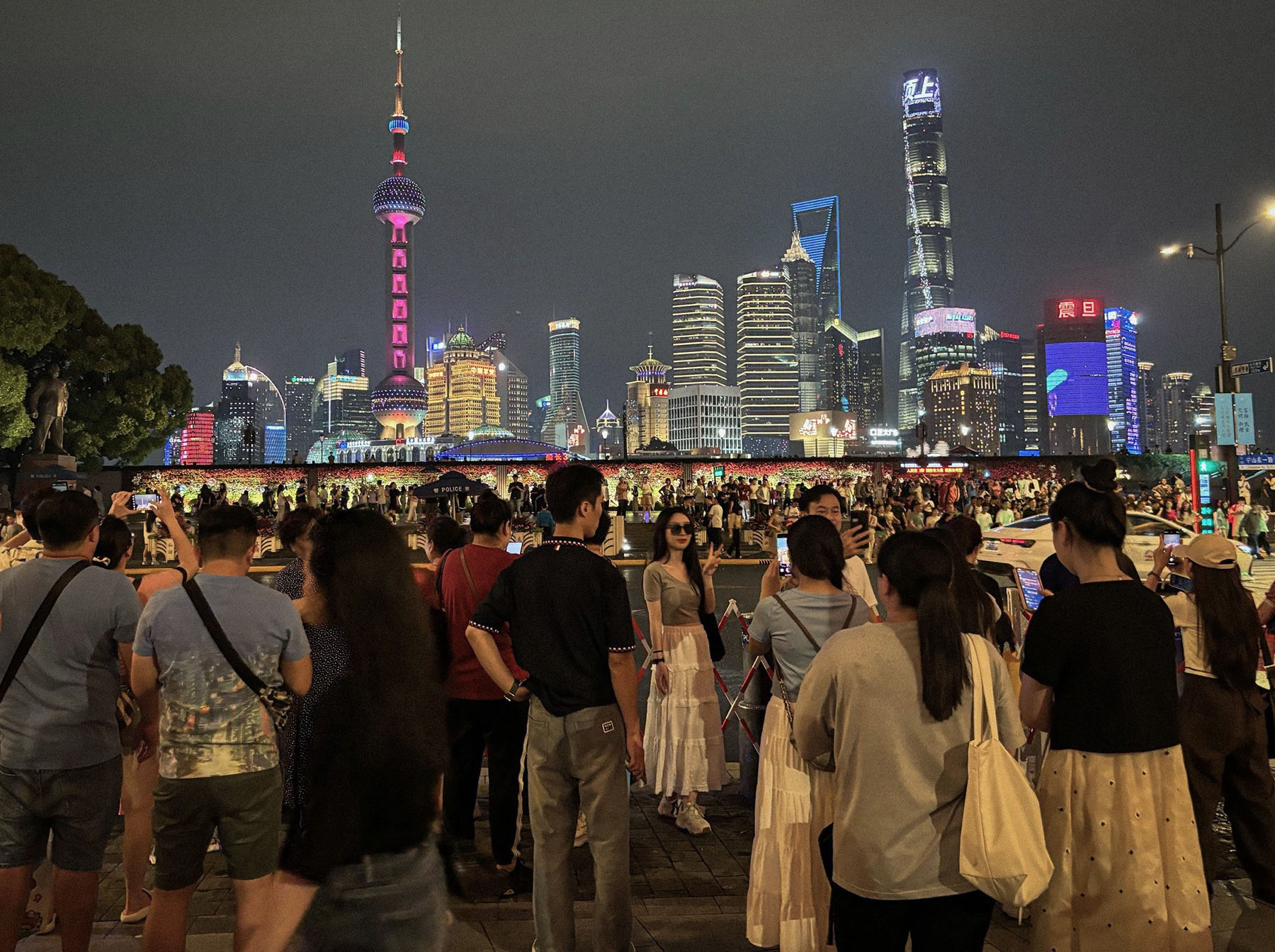
Two shows at once - Shanghai
The skyline performs nightly and the crowd shows up to receive it. Hundreds of people photographing the same direction - the Oriental Pearl Tower lit pink, Shanghai Tower glittering above everything, the whole of Pudong doing exactly what it was built to do. A woman in a white dress turns the other way, posing with the skyline behind her; a man nearby takes a selfie. Two shows running simultaneously: the city performing for the crowd, the crowd performing against the city. Nobody is just watching. The tourists didn't choose this frame randomly; generations of postcards, films, and social feeds trained them to recognize it as important. We photograph what we have been taught to see.
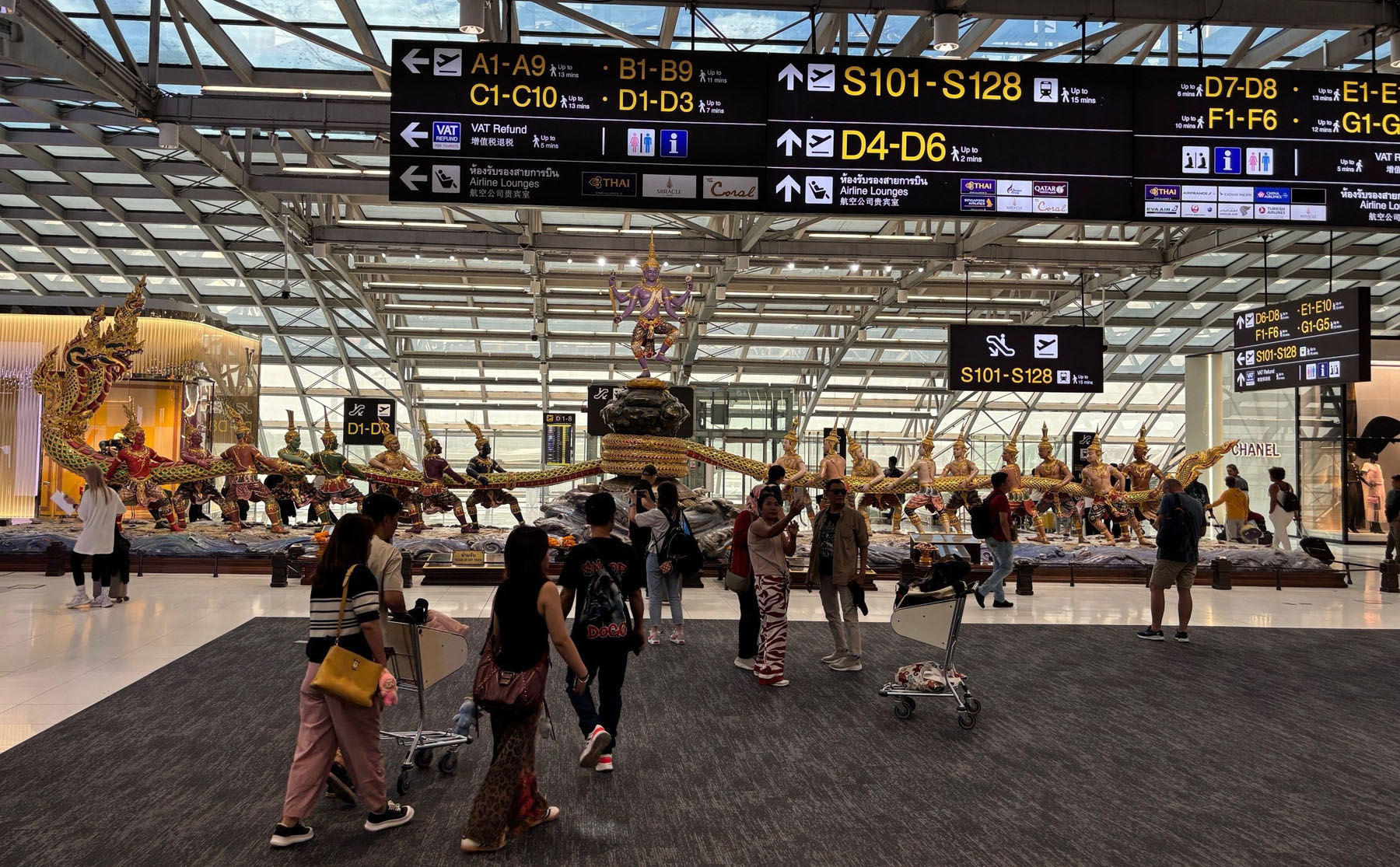
Heritage as signal - Bangkok
The first thing you see arriving in Bangkok, the last thing before you leave: a monumental scene from Hindu-Buddhist mythology - gods and demons pulling a giant serpent, one of the founding stories of Thai culture - placed in the centre of a departure hall next to a Chanel store and flight information screens. Most people walk past without stopping. A few photograph it. The airport understands what heritage is for in a transit space - not contemplation, but signal. This is Thailand. You are here. The mythology performs nationality at industrial scale, for forty million passengers a year.
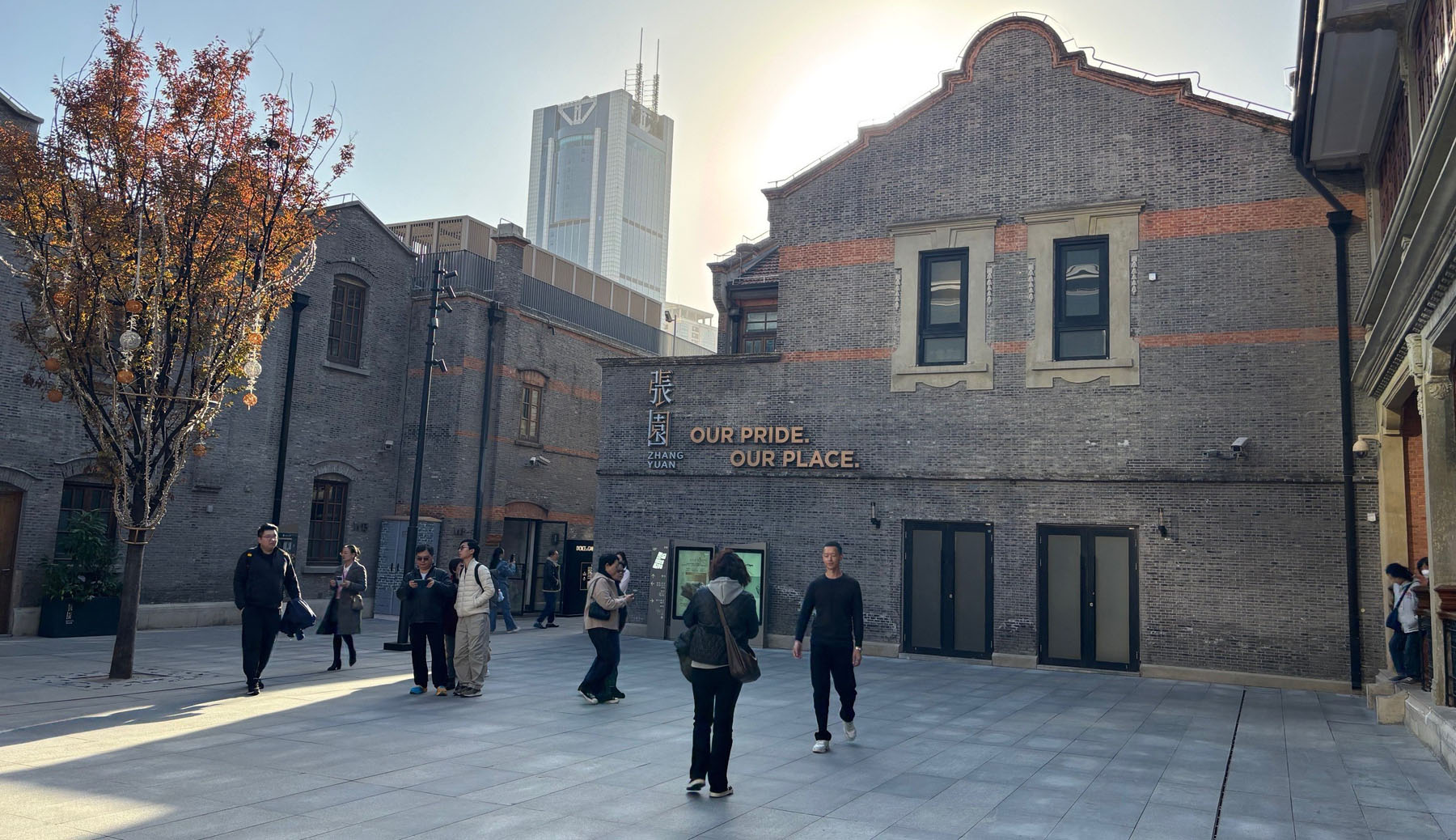
Our pride, our place - Shanghai
The heritage compound was built as a private estate in the 1880s. Now hundreds move through it daily - photographing, lingering, buying coffee. Spaces built for exclusion have been claimed for collective experience. But the detail that makes this photo is on the wall: OUR PRIDE. OUR PLACE. Someone decided that reclaiming this colonial-era space required a declaration. The slogan tells you the renovation wasn't just architectural - it was an argument about who Shanghai belongs to. The glass tower rising directly behind it makes the same argument in a different language.
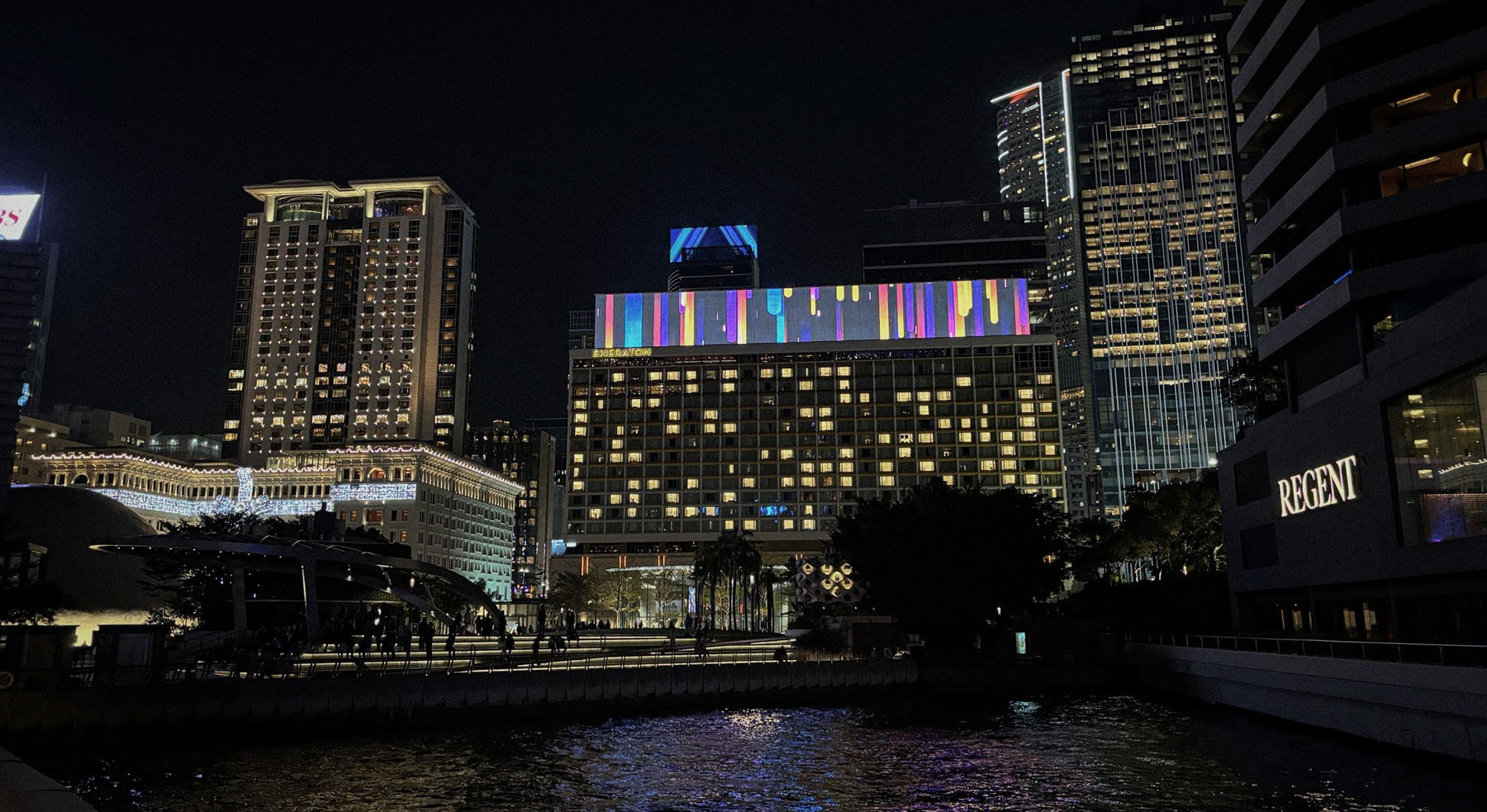
The show goes on - Hong Kong
The LED display runs across the roofline whether anyone is watching or not. The Peninsula Hotel has been lit every night for decades - the lights have outlasted handovers, recessions, protests, pandemics. The Regent sign glows. The harbor reflects everything back. Hong Kong at night performs continuity: the message is that the show goes on, that the city is still open, still bright, still doing what it has always done. The audience is optional. The performance is not.
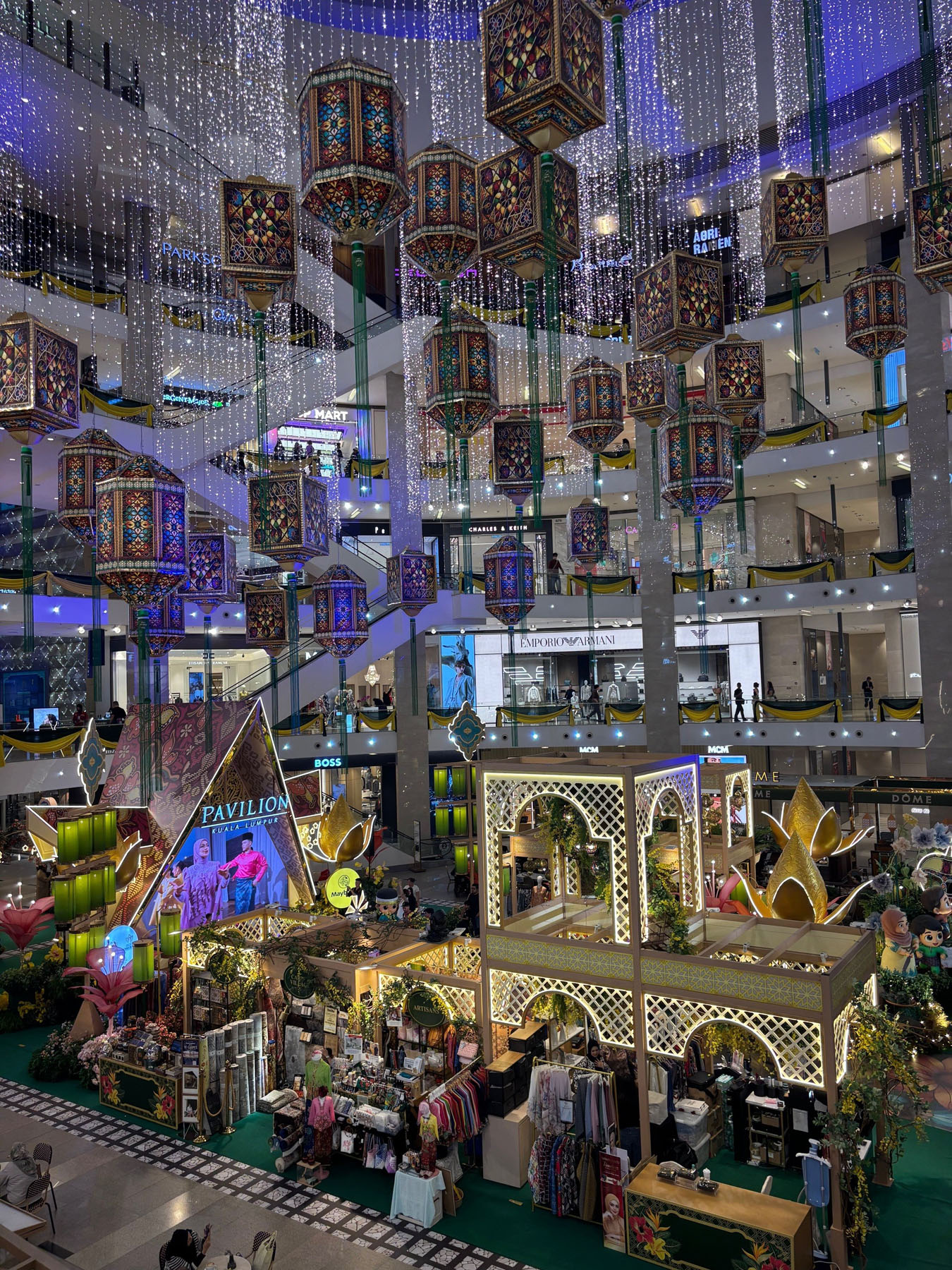
Tradition as decoration - Kuala Lumpur
Hundreds of traditional Malay lanterns hang from the ceiling for Hari Raya. Below them, Emporio Armani and BOSS. The shopping complex understands its role: create moments that feel cultural but function commercially. People photograph the lanterns while standing in a mall, tradition performed as decoration, heritage as marketing. The lanterns are real; the context is staged. Both truths coexist.
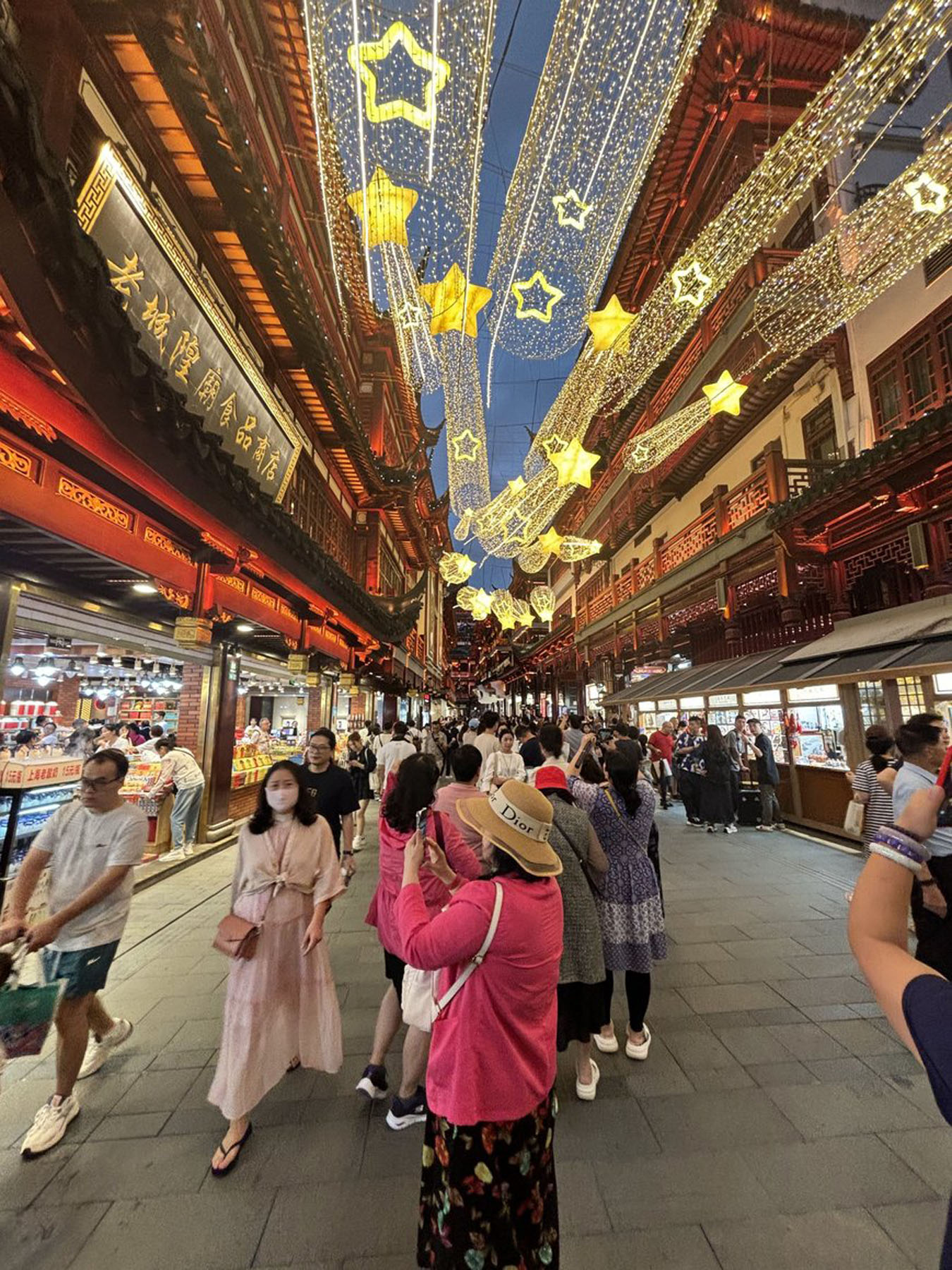
Heritage and luxury - Shanghai
A woman photographs the LED-lit traditional architecture with her Dior hat visible in frame. Around her, hundreds of people move through the same bazaar - buying, eating, photographing. Heritage and luxury perform together. The garden bazaar offers both authenticity and spectacle: actual old buildings decorated with contemporary lights. The woman isn't choosing between tradition and modernity - she's documenting her simultaneous access to both.
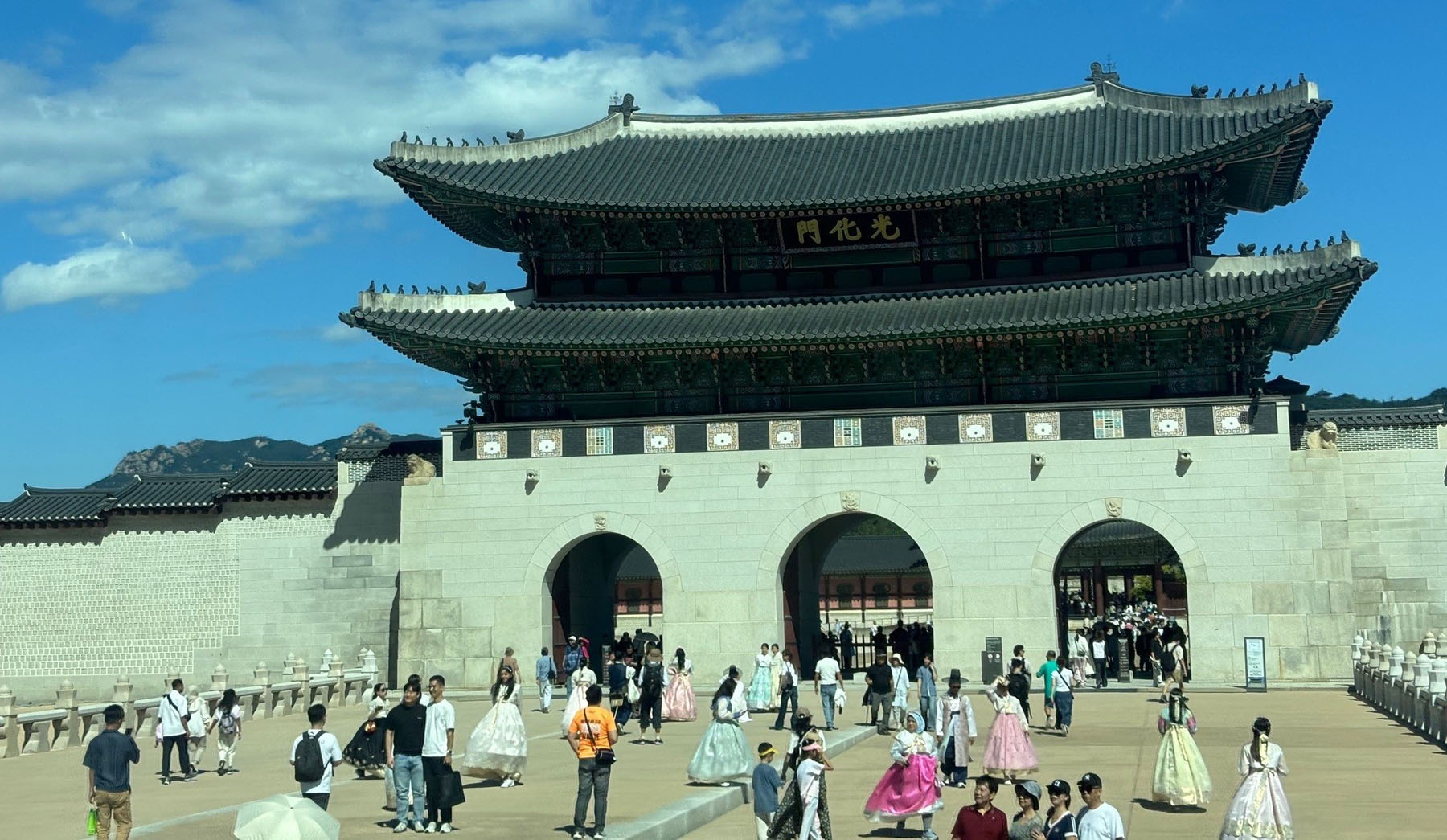
Participation completes it - Seoul
Anyone can rent a hanbok around the corner and enter the palace in costume - and hundreds do, every day, regardless of where they're from. The gate performs royal history; the visitors perform belonging to it, for the duration of a photo shoot. Nobody is pretending this is their heritage. They are simply choosing the best costume for the best photo in the best setting. The site designed the incentive; the visitors responded. The performance is entirely voluntary, which is what makes it work.
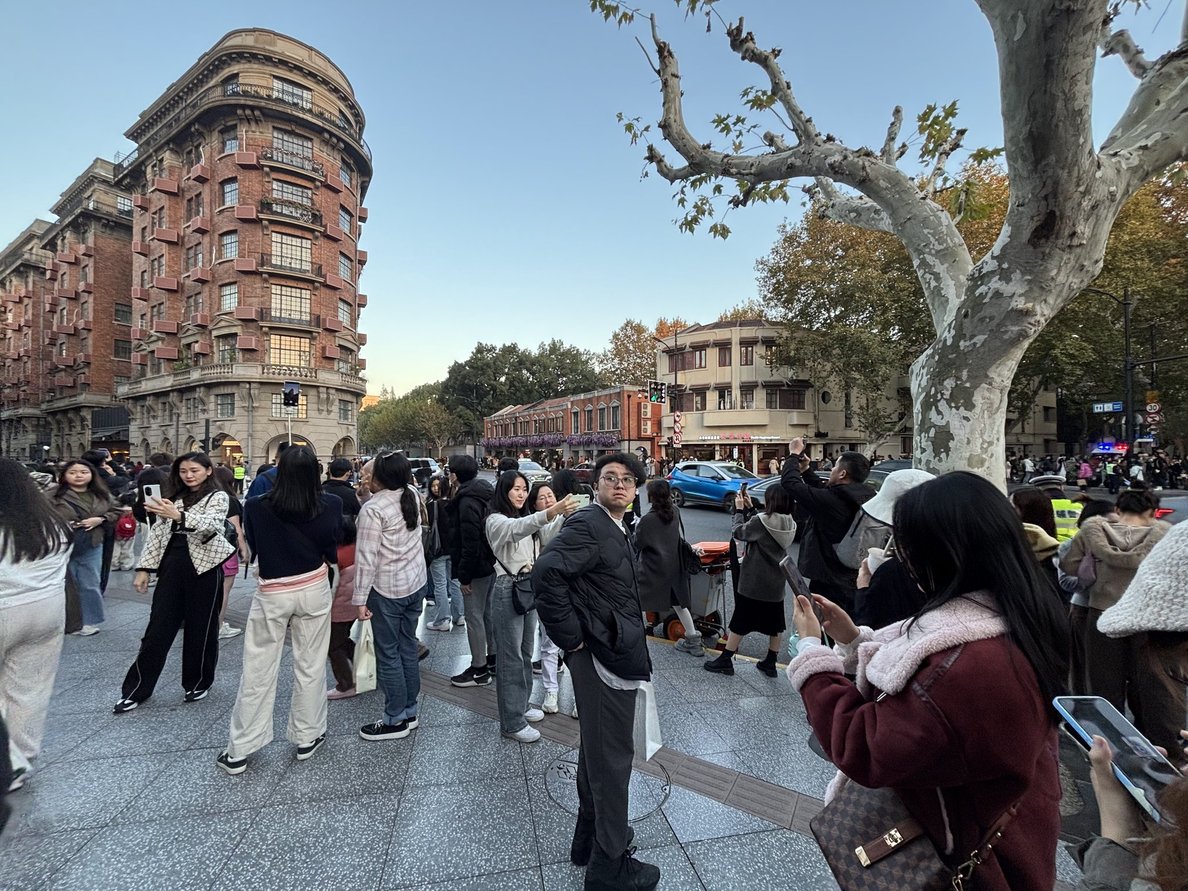
Layers of witnessing - Shanghai
Everyone photographs the heritage building from different angles. None look at it directly - they compose, they frame, they capture. Except one man, who has stopped looking at the building altogether. He stares up and away, somewhere else entirely, expression unreadable - confused, distracted, or simply done. Around him the ritual continues. The building performs history; the photographers perform documentation; passersby photograph the photographers. Layers of witnessing, each authentic, each staged.