Cultural confidence - Shanghai
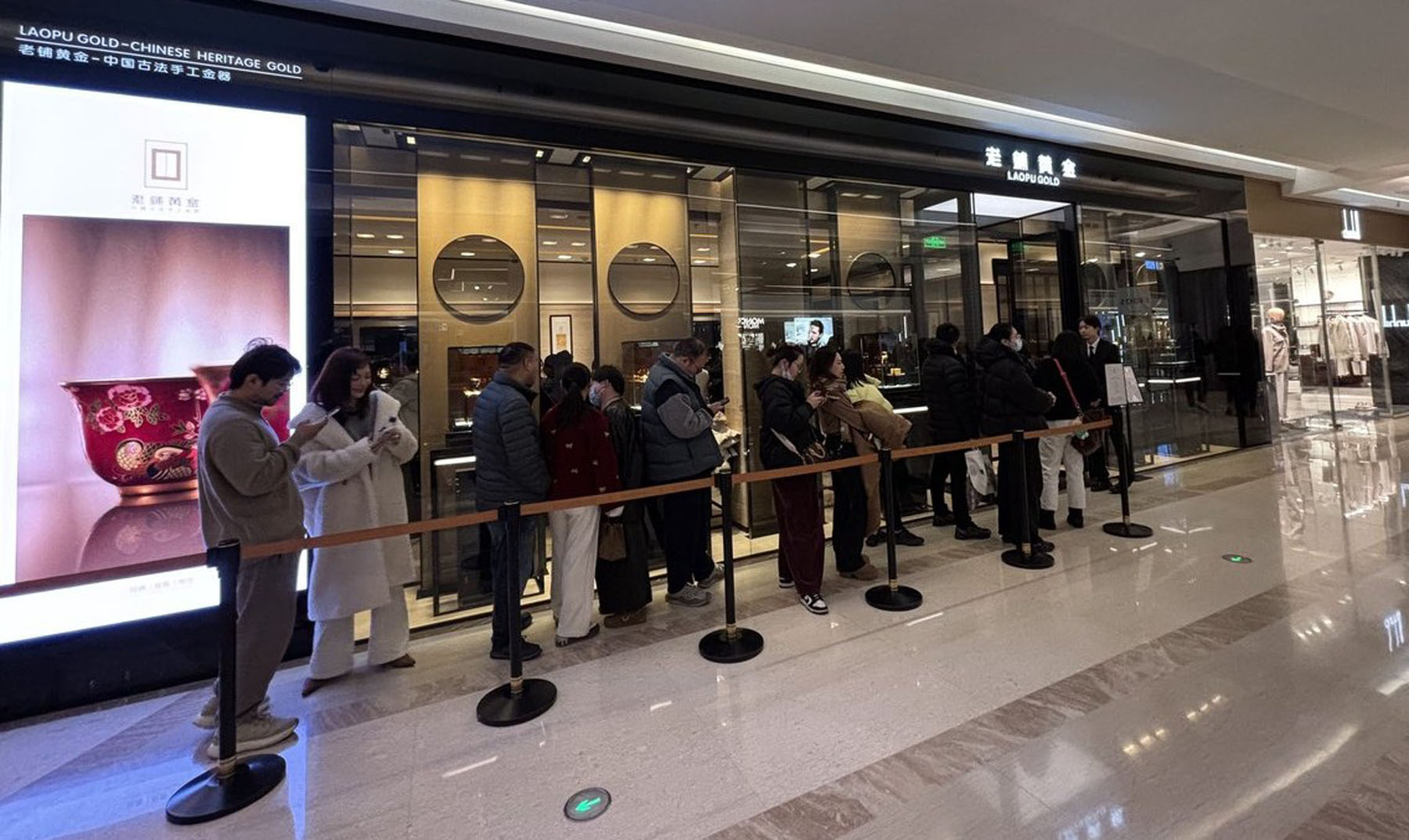
New Chinese luxury doesn't look like Western luxury. It looks like this: a queue of young professionals waiting for handcrafted gold with Tang dynasty motifs, priced beyond necessity and chosen deliberately. They are not buying jewelry - they are buying cultural confidence. After decades of Chinese consumers purchasing Western logos as the primary status signal, Laopu represents a generational shift: the assertion that Chinese heritage craft is itself a form of luxury, that local knowledge is worth more than imported branding. The length of the queue is the measure of how new and how significant that idea is.
Value over generations - Shanghai
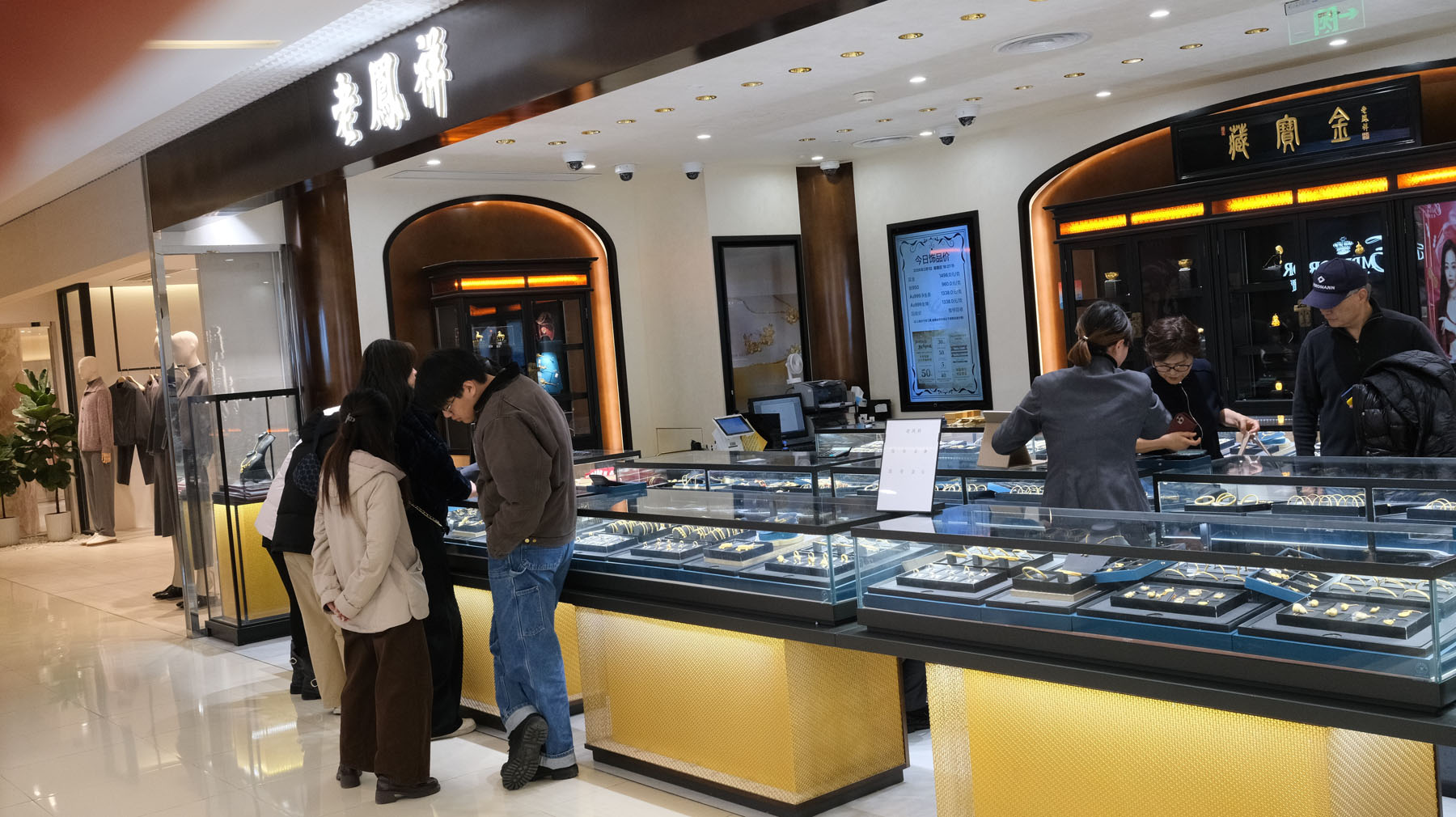
The traditional gold shop serves a different generation with different calculations. Heavy yellow gold - priced by weight, not by design, chosen for weddings and gifts and the practical accumulation of value across uncertain decades. The browser isn't performing consumption; she is conducting due diligence. These shops have operated for over a century because they provide something beyond fashion: they participate in the transfer of wealth and meaning between generations, the same transaction in different forms, repeated until it becomes ritual.
Access as performance - Shanghai
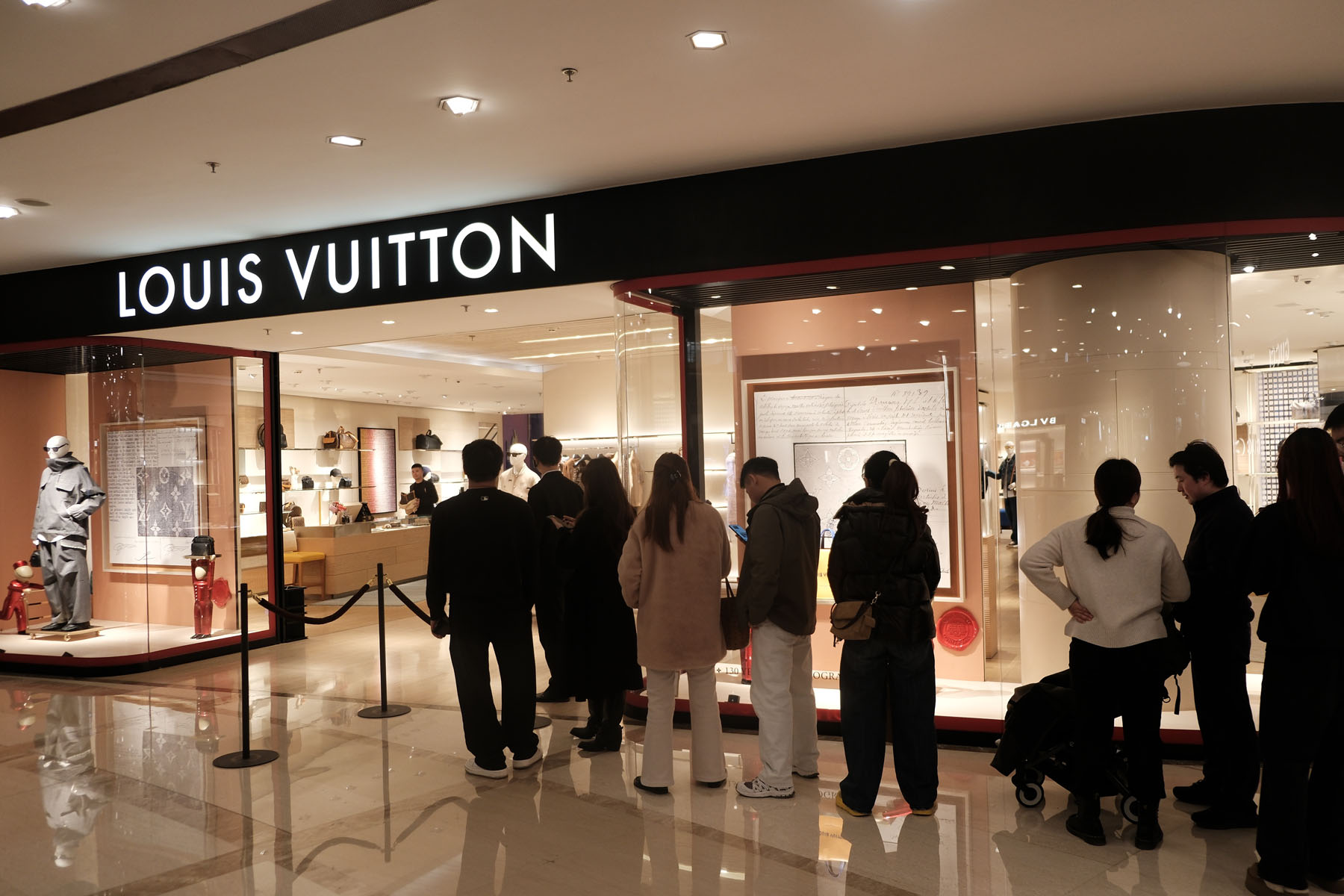
The queue outside the European luxury store is itself a controlled performance. The brand's value is partly constituted by difficulty of access - the wait, the selective entry, the visible gatekeeping. Participants understand this and accept it, because the waiting is inseparable from the meaning of what follows. To walk out with the bag, you must first be seen standing in the line. The discomfort is the proof. The willingness to wait publicly, in front of passersby, is the demonstration that the purchase is worth it.
Taste as signal - Shanghai
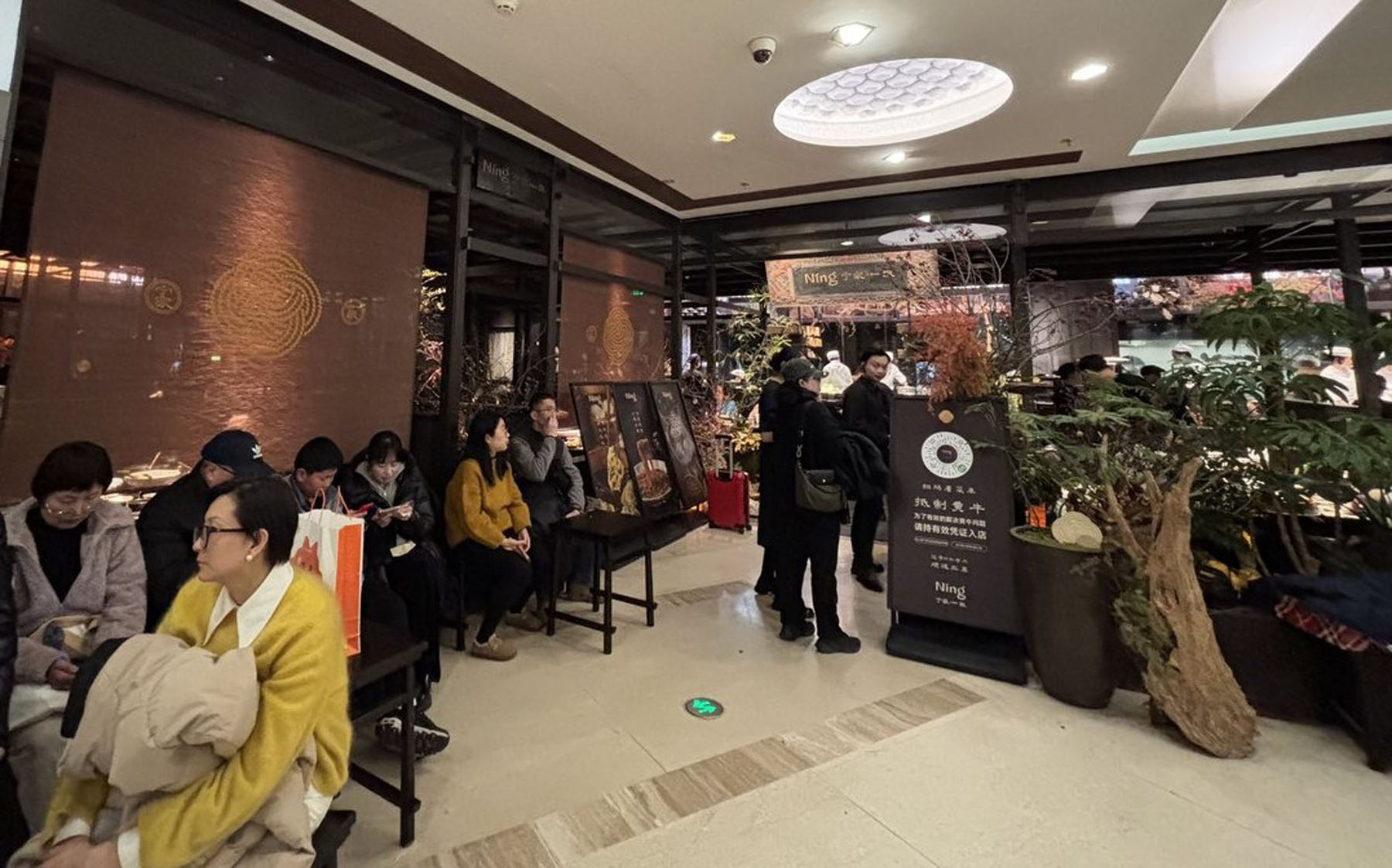
The restaurant queue operates on different social logic than the luxury queue. The diners aren't performing to strangers on the street - they're confirming shared taste among people like themselves: the same access to information (you have to know about this place), the same willingness to wait for quality over convenience, the same calculus that spending a Saturday afternoon in a queue is a reasonable use of leisure time. Standing here at Grand Gateway 66 signals urban sophistication of a specific kind - you are not someone who eats at the first available table.
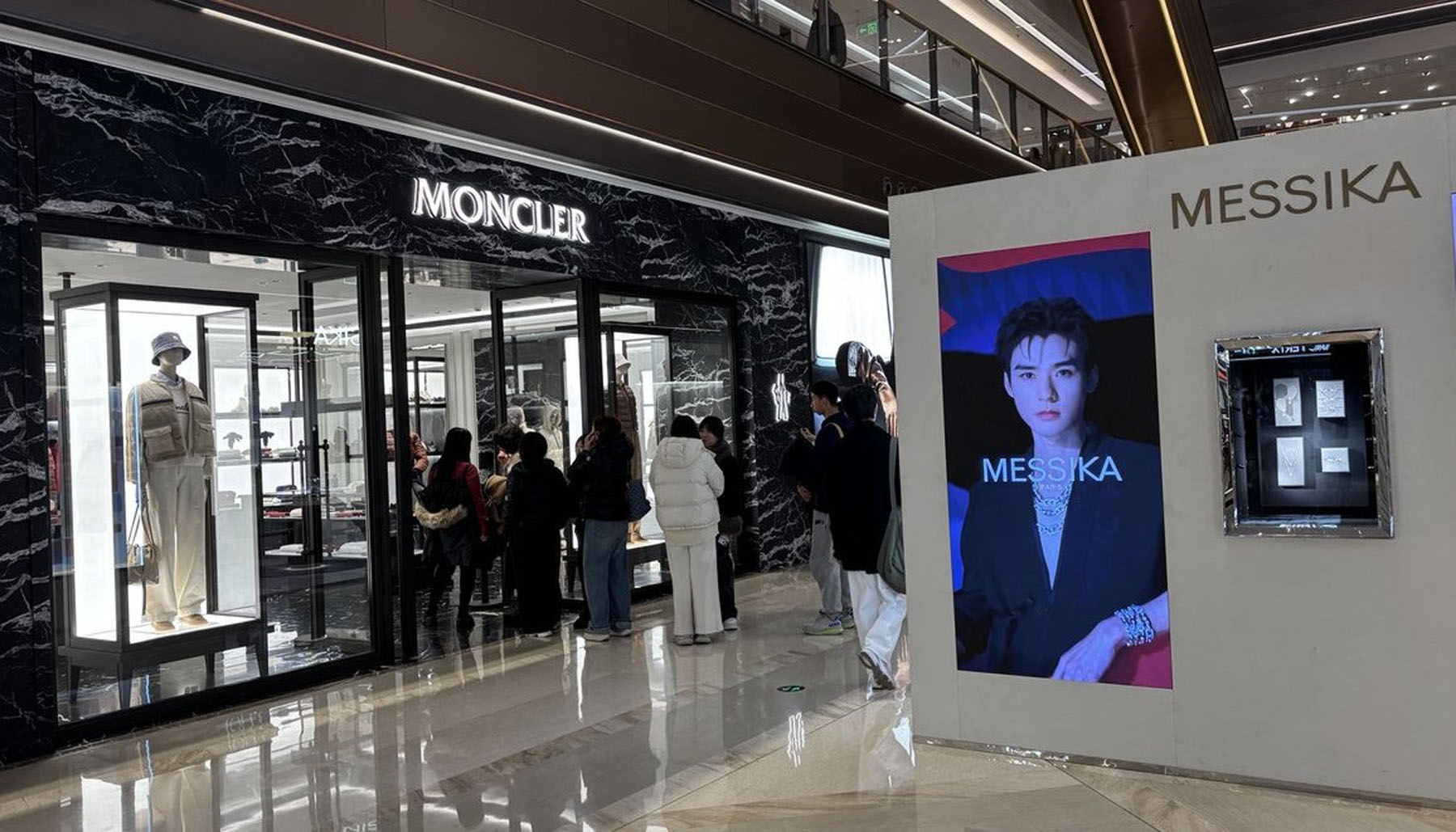
Altitude performed - Shanghai
Technical alpine clothing sold in a climate-controlled mall in subtropical Shanghai. The customer is not buying insulation - they are buying access to an imagined identity, the person who skis serious mountains, whose leisure is active and physically demanding and expensive. The coat will likely never encounter the conditions it was engineered for, and this is understood by everyone involved. Luxury sportswear sells membership in an aspirational community of global, mobile affluence. The store window performs altitude. The purchase performs belonging.
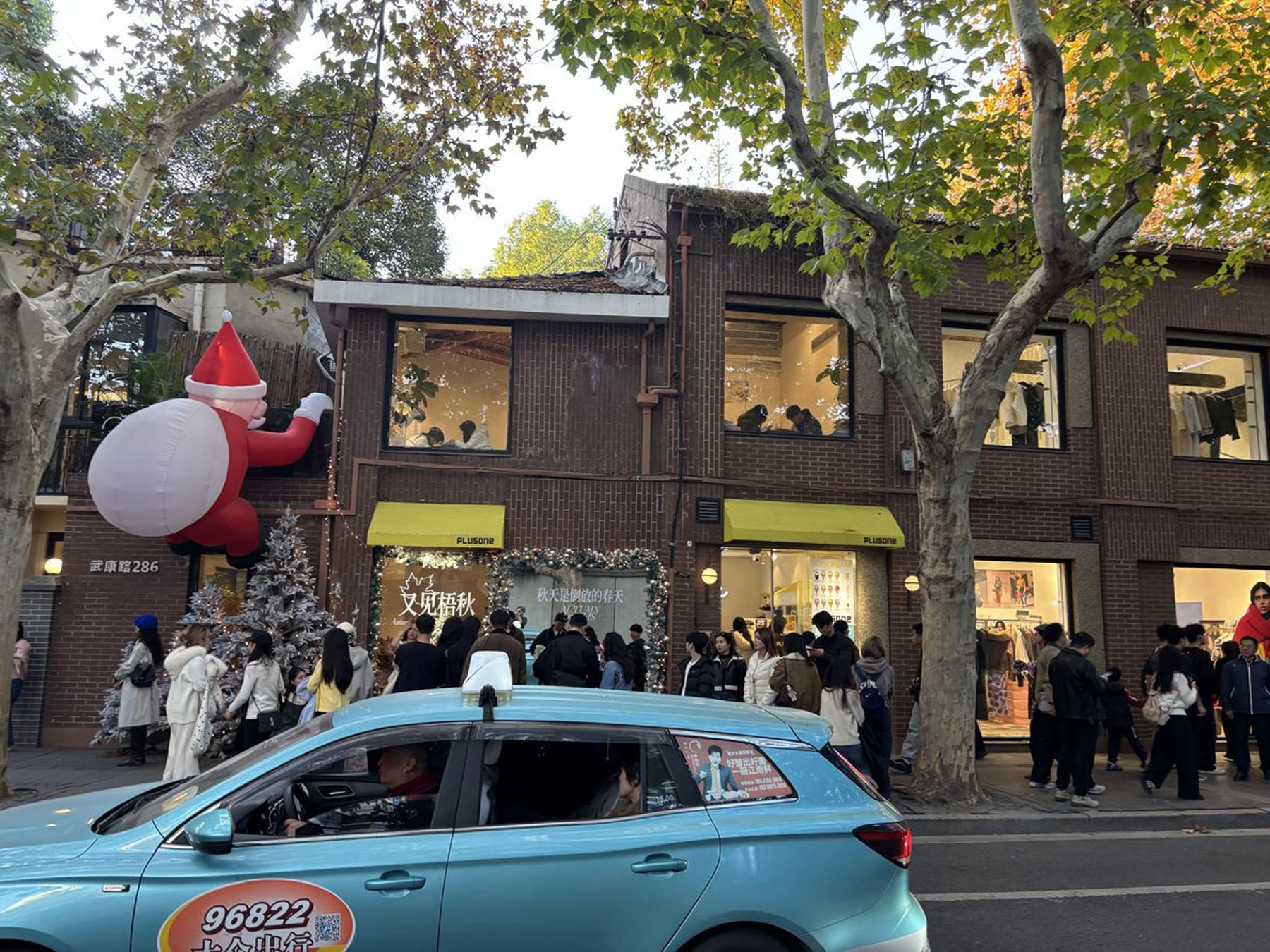
The setting as product - Shanghai
Wukang Road in the French Concession dresses itself for every season. The brick building at number 286 has an inflatable Santa climbing the wall, white Christmas trees in the doorway, an autumn campaign sign still in the window. The crowd outside isn't queuing for anything specific - they're here because this street, this staging, this combination of heritage neighbourhood and seasonal decoration is itself the destination. The people waiting to get in are also the reason others stop to look. Some queue for the product, others for the performance of queuing. The blue taxi passing through completes the frame without trying to.
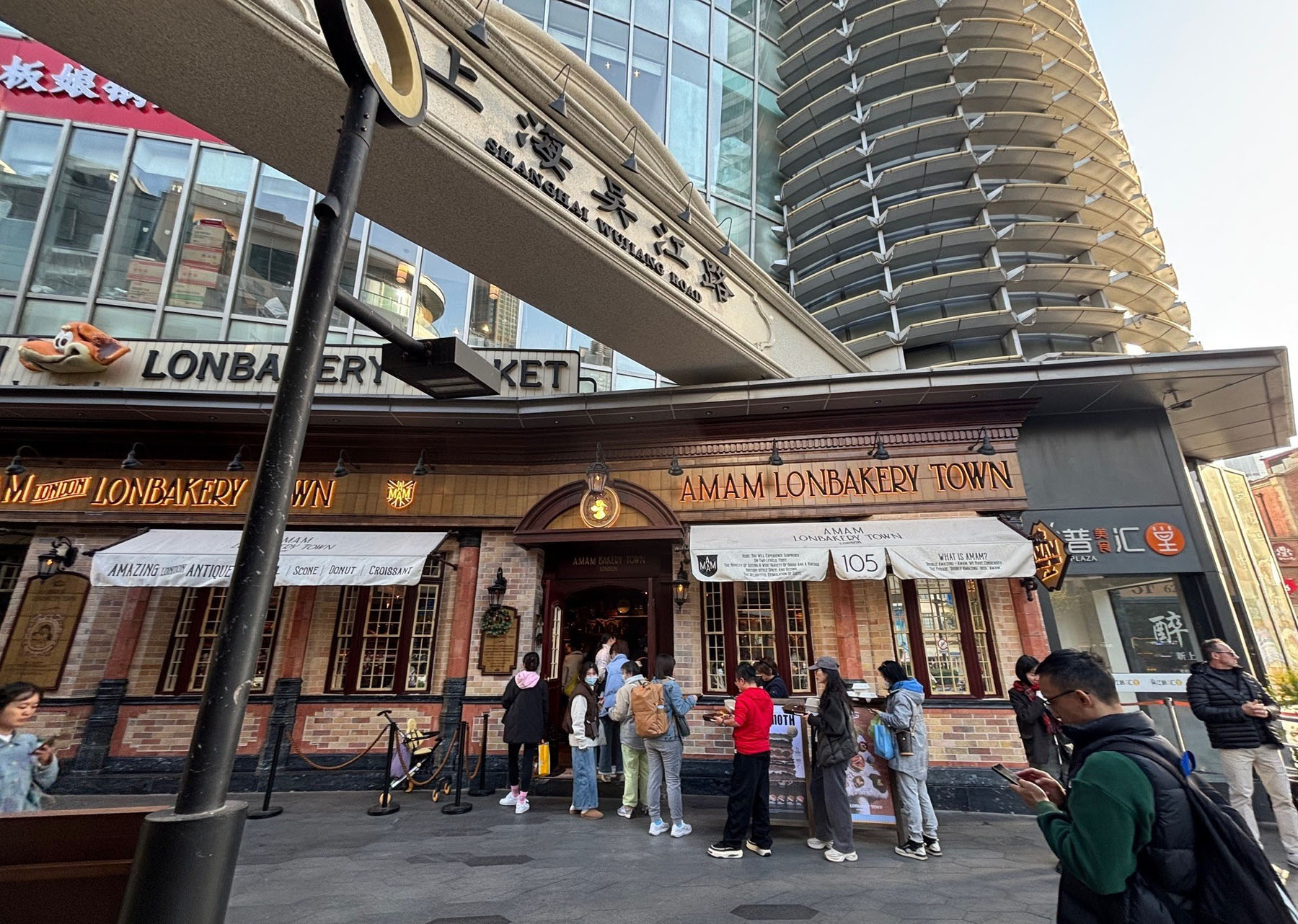
Layers of translation - Shanghai
The bakery is Japanese. The aesthetic is Victorian London. The queue is Shanghainese. Amam Lonbakery Town sells scones and croissants - food with no roots in Chinese culinary tradition - from a facade that could be a film set: brick arches, gas lamp styling, awnings listing "Amazing. Antique." as selling points. Behind it, the HKRI tower. The customers are not buying bread - they are buying the experience of a place that never quite existed, assembled from borrowed imagery and sold as a destination. Prosperity here is performed through layers of translation: British heritage, Japanese curation, a younger generation's appetite for the carefully staged.