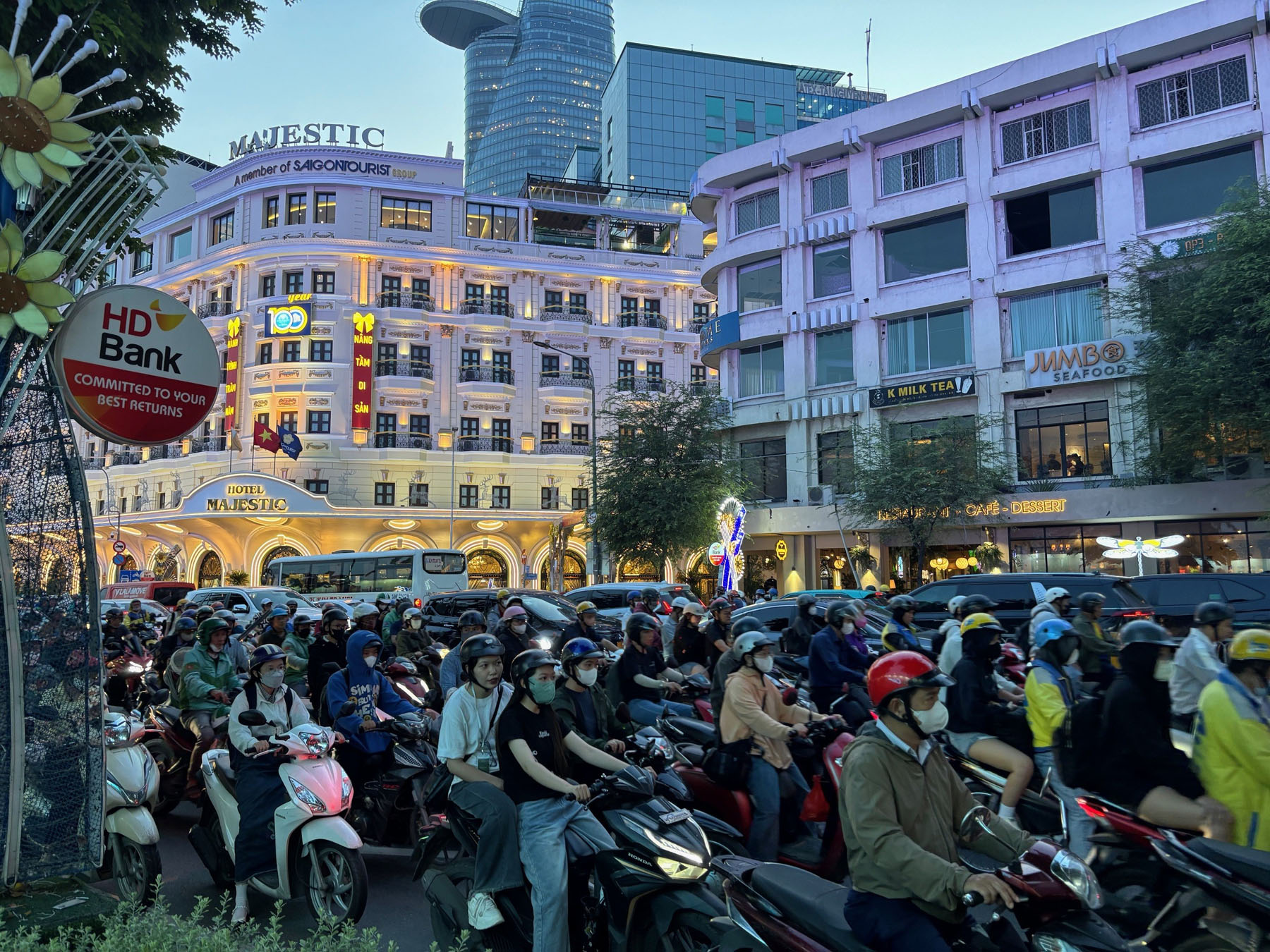
The ritual evening - HCMC
The Hotel Majestic has stood on this corner since 1925. Every evening, the rush hour comes to it. Hundreds of motorbikes pack the intersection at dusk - not quite stopped, not quite moving, a dense negotiation of inches. Each rider reads the space available and claims exactly that much, no more. The colonial facade glows behind them, indifferent to the ritual happening at its feet, the same ritual every evening, the city moving itself home.
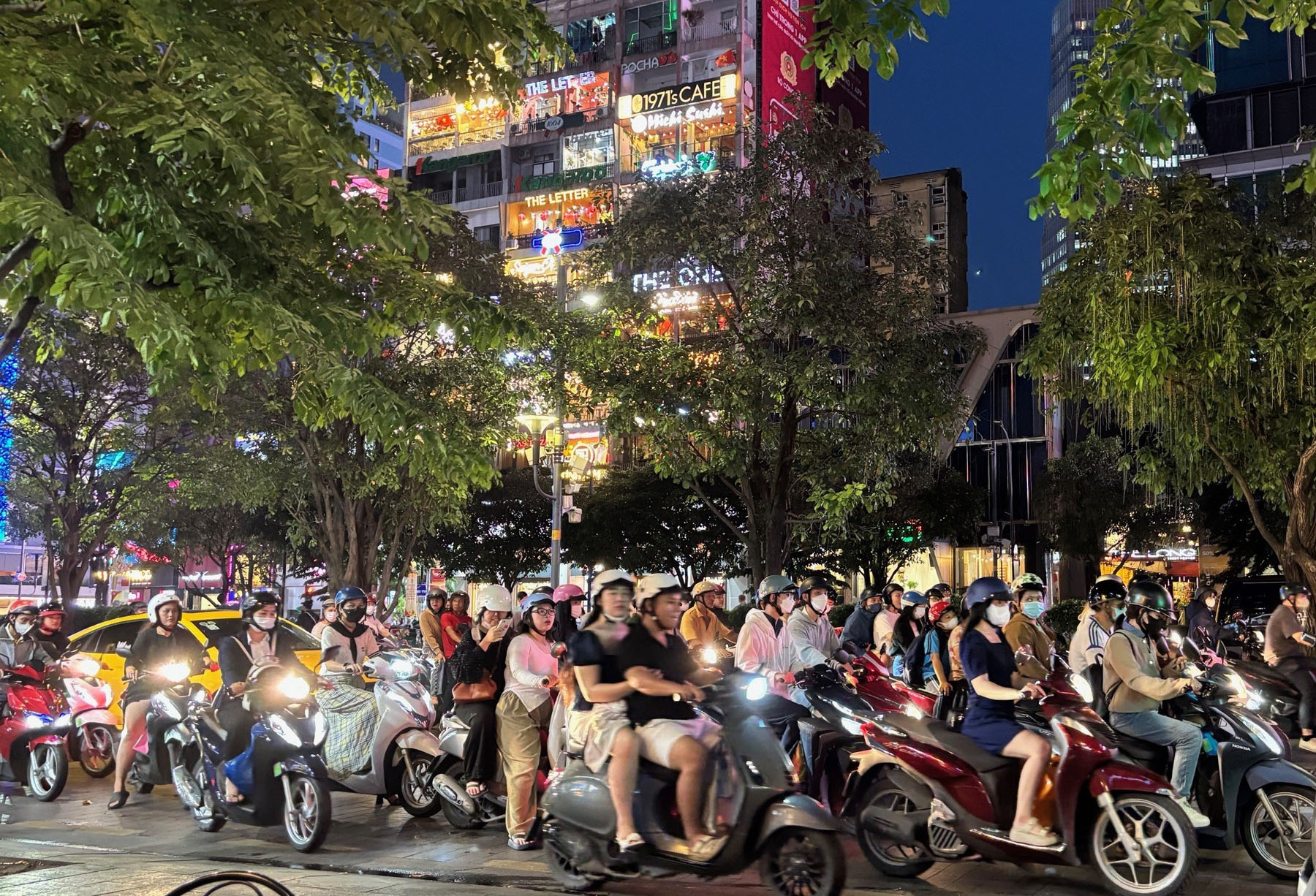
Friday release - HCMC
Friday night and the city releases all at once. The motorbikes flow under the trees, neon signs reflecting off helmets, the stream finding its own speed and direction without anyone directing it. Friday traffic feels different from Monday traffic - looser, slightly faster, people leaning into the weekend. The city has its own mood and the road carries it.
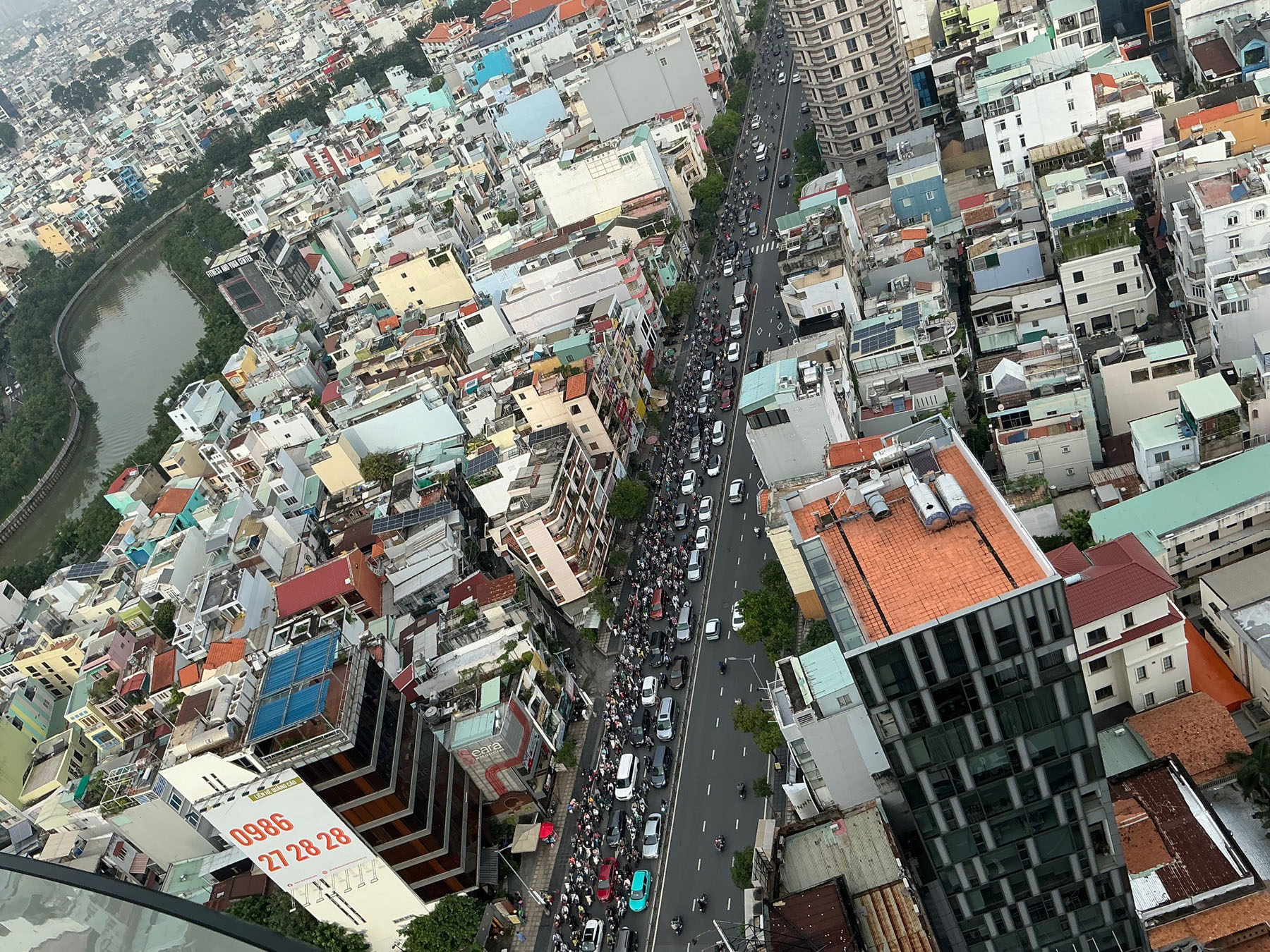
Legible from above - HCMC
From this height the road becomes a single dense thread running through an ocean of rooftops. The canal curves away to the left; the city extends in every direction with no visible edge. The traffic below - invisible as individuals, legible as a system - fills the road from side to side without overflowing it. The system has found its own capacity and operates exactly at it, every day.
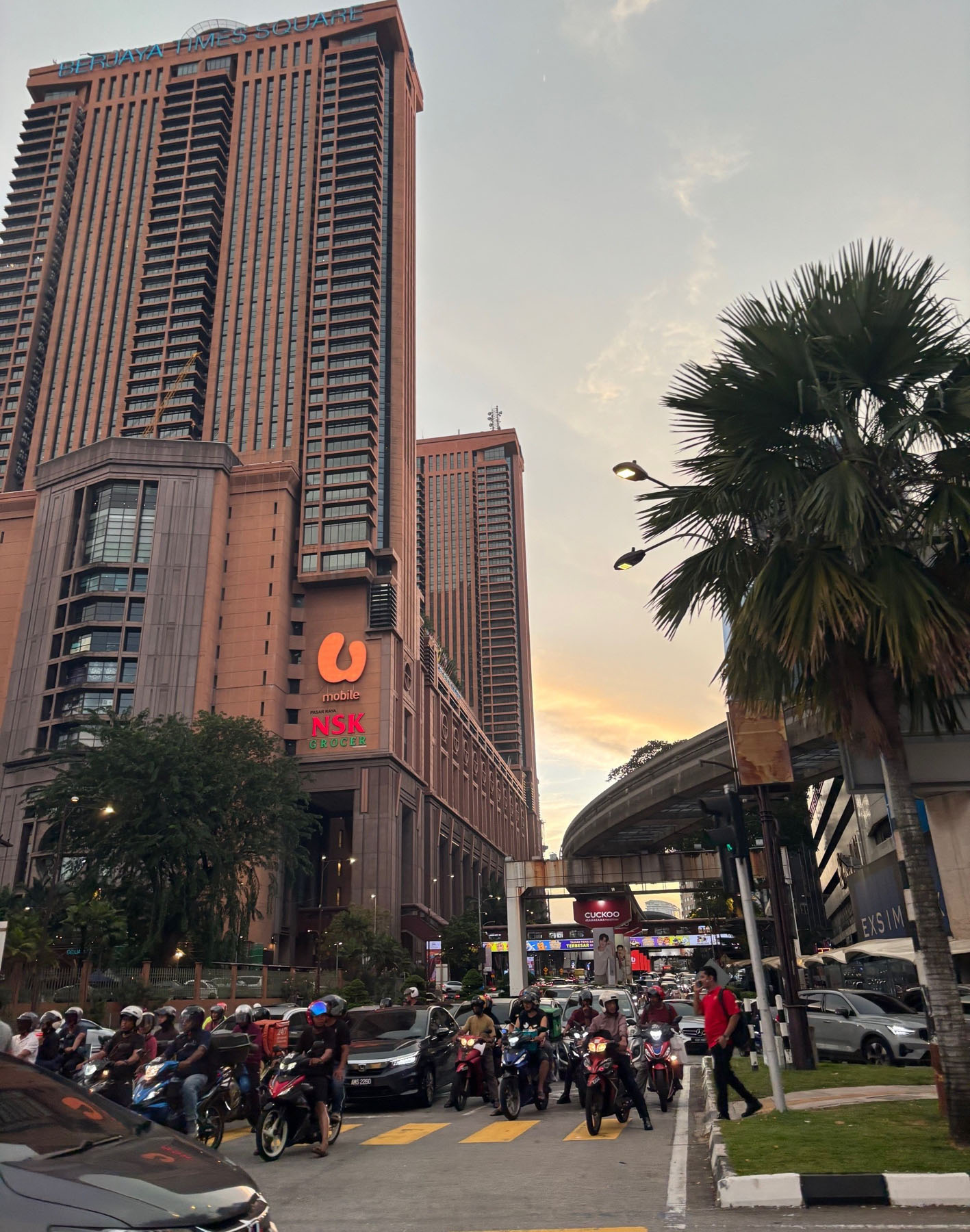
Layers, not integration - Kuala Lumpur
Kuala Lumpur stacks its transport at sunset: motorbikes and cars at street level, the elevated rail curving overhead, the Berjaya Times Square tower rising above everything. Each system moves on its own logic - the bikes threading the intersection, the rail following its fixed arc, the tower indifferent to both. The city didn't integrate these layers; it simply added them. They coexist without meeting, each one solving a different version of the same problem.
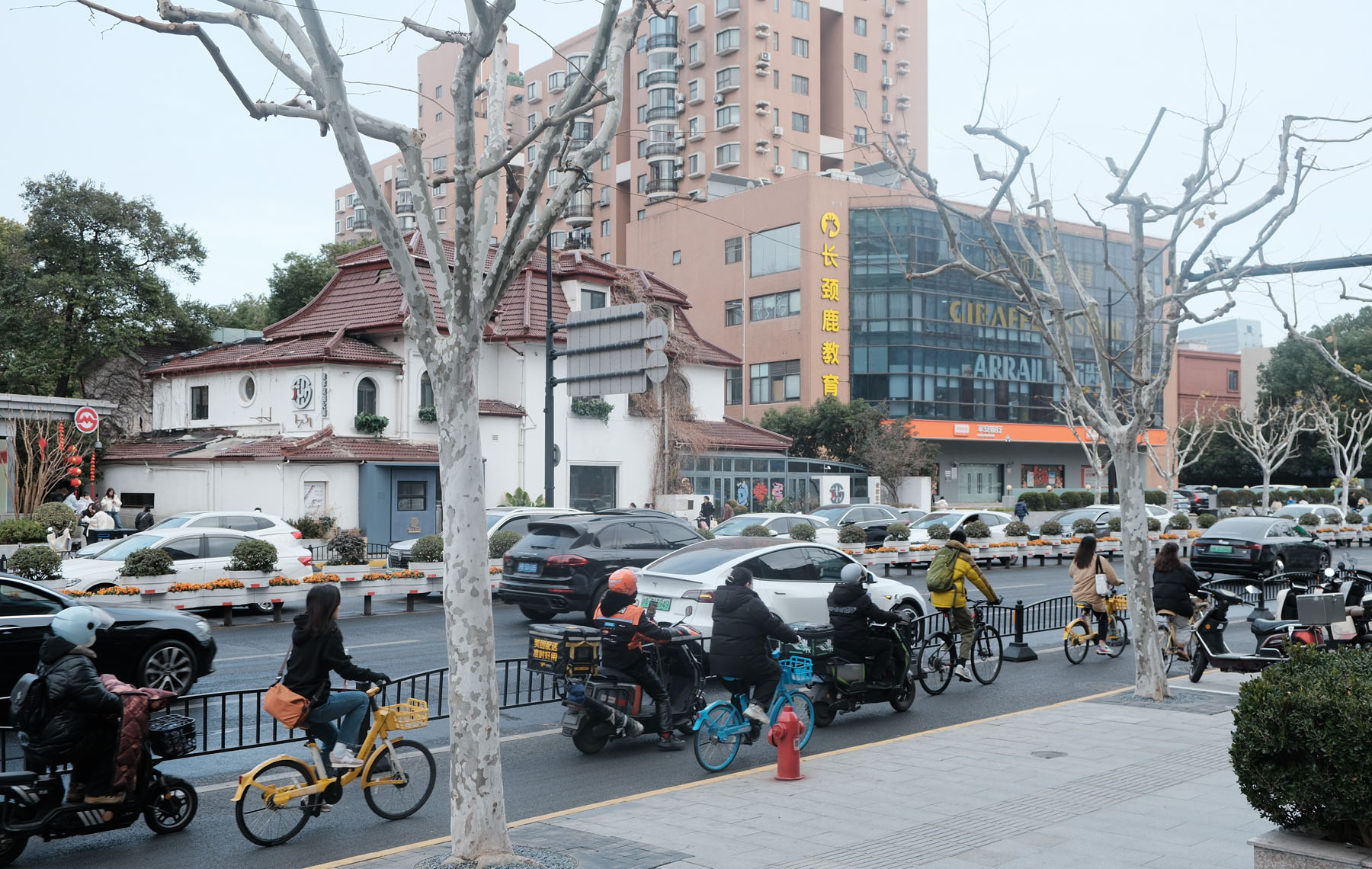
Tidier, less alive - Shanghai
The bike lane is separated, orderly, colour-coded: yellow share bikes, blue share bikes, e-bikes, a delivery rider with a cargo frame. Beyond the barrier, cars. This is Shanghai's solution - not the fluid negotiation of Saigon or Kuala Lumpur, but separation by category, each mode assigned its lane and expected to stay in it. The old European building on the corner watches all of it. The system is tidier. It is also less alive.